
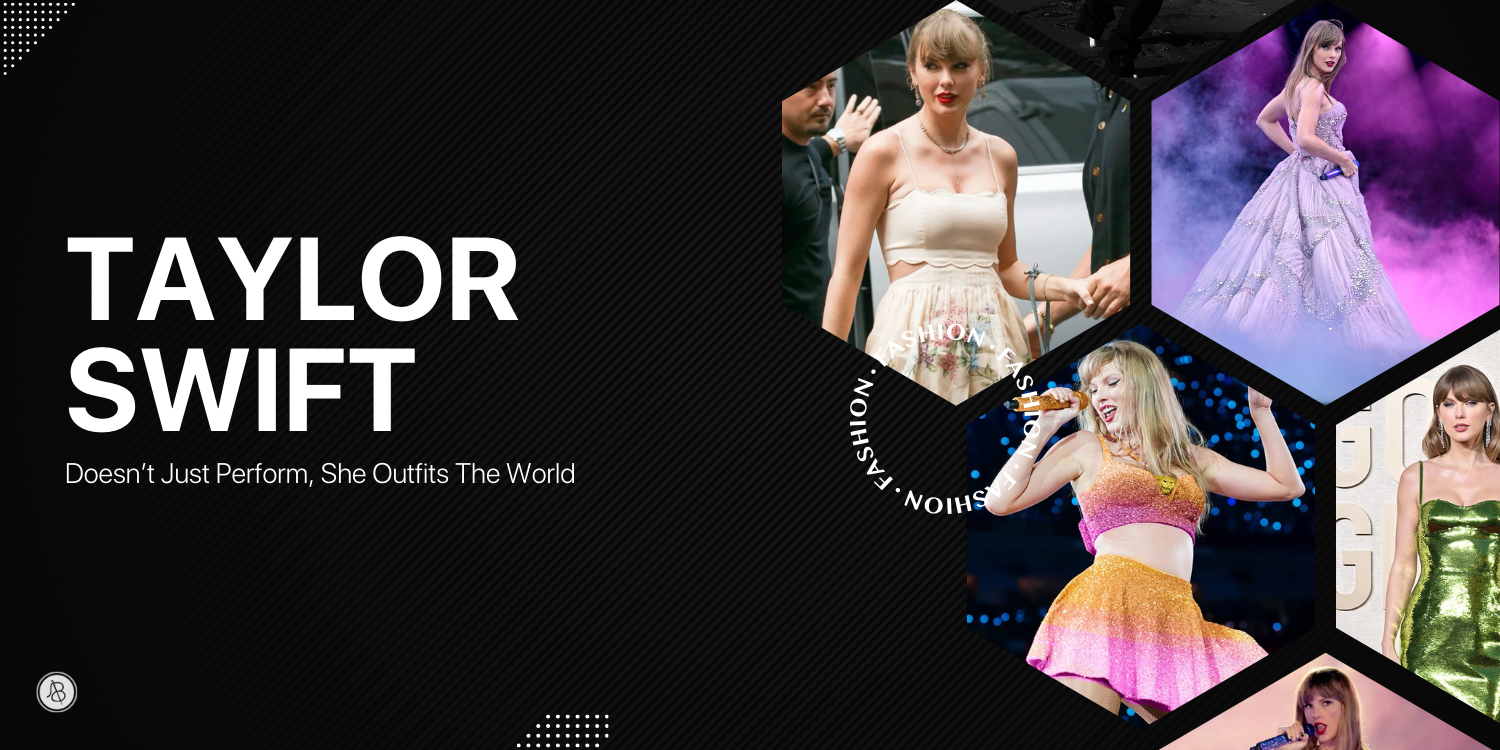
Taylor Swift’s fashion does not exist separately from her music. It never has. To view her wardrobe merely as a collection of clothes is to miss the point entirely. For Swift, fashion is a language—a dialect of sequins, silhouettes, and color palettes that communicates where she has been, where she is, and, perhaps most excitingly, where she is going. Each outfit works like an extension of the performance, the moment, or the phase she is currently inhabiting. It is storytelling stitched into fabric.
Over the last year, we have witnessed a masterclass in style evolution. Her aesthetic has moved fluidly between stage spectacle, red carpet elegance, and everyday street dominance, all while maintaining a cohesive narrative thread. This isn't just about looking good; it's about world-building. From the high-octane glamour of the Eras Tour to the quiet luxury of her off-duty days in New York City, Swift has curated a visual identity that is as multifaceted as her discography. She has proven that style is not static. It is a living, breathing entity that evolves with you.
In this deep dive, we explore the definitive looks that have shaped her recent style era. These are not just outfits; they are cultural moments that celebrate confidence, intentionality, and the joy of dressing for oneself.
The Eras Tour: Bodysuit Magic and Stage Spectacle
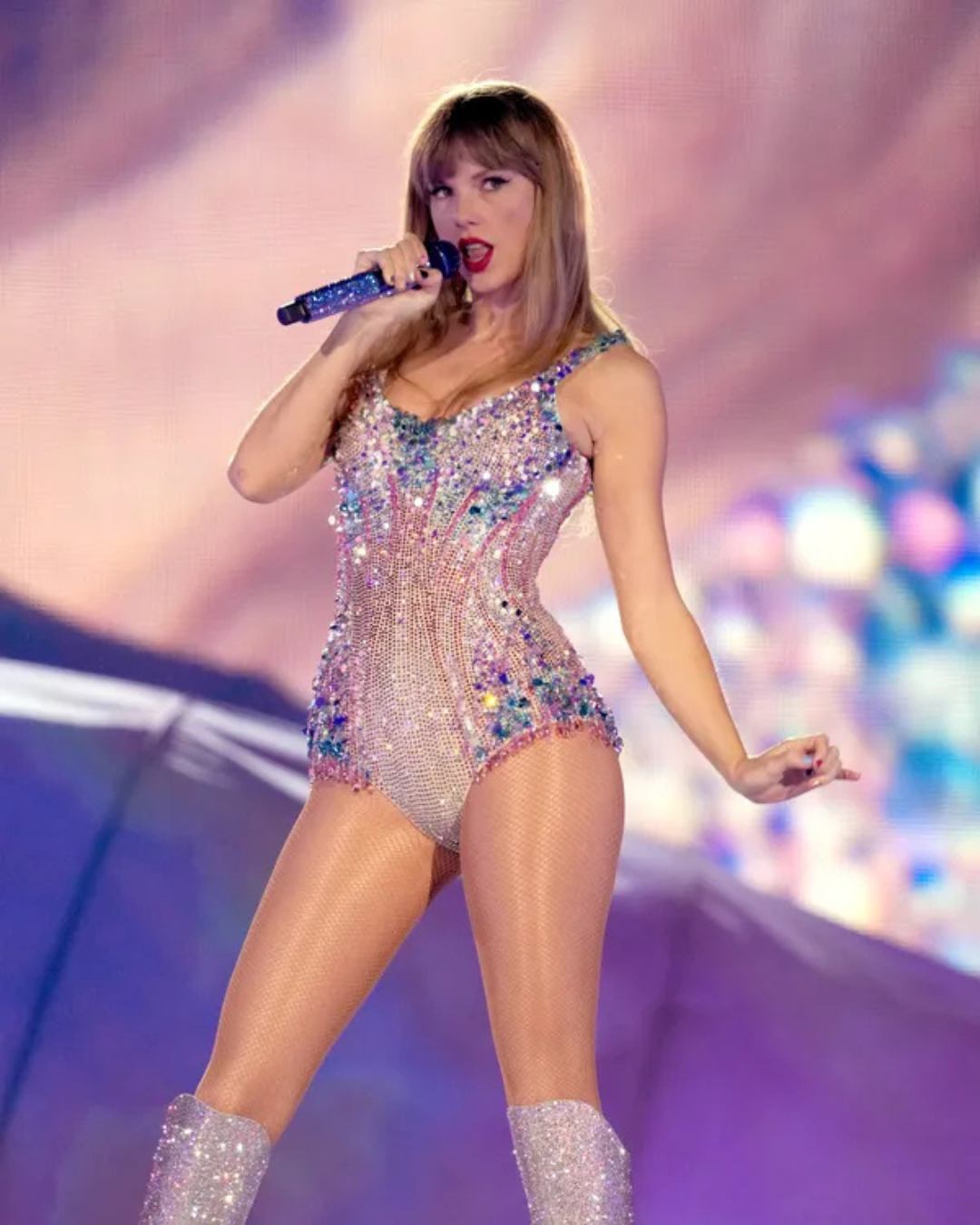
When the history of concert fashion is written, the Eras Tour will deserve its own chapter. It redefined what performance wear could be. This wasn't just about costumes; it was about creating a visual odyssey that mirrored the emotional arc of a three-hour setlist. At the heart of this spectacle was the now-iconic custom Versace bodysuit.
Designed for movement, light, and emotion, these bodysuits became the armor of a pop titan. The sheer technical mastery involved in these pieces is staggering. We aren't just talking about sparkle; we are talking about structural integrity meeting high fashion. The bodysuits were paired with Christian Louboutin boots—a practical necessity for the physical demands of the show, but elevated to luxury status.
What makes these looks define her era is the use of color gradients. Each variation of the bodysuit mirrored the mood of the setlist, acting as a visual cue for the audience. The transition from the pastel, dreamlike hues of the Lover era to the sharp, dark edges of Reputation was signaled not just by the chords played, but by the crystals worn. It turned fashion into a narrative device. The clothes were doing the work of a narrator, guiding the stadium through the timeline of her career.

Birthday Stardust: The Clio Peppiatt Moment
If the Eras Tour was about spectacle, her 34th birthday look was about celebration. Stepping out in New York City, Taylor chose a look that felt like a reclaiming of the "Bejeweled" energy she sings about. The centerpiece was a Clio Peppiatt beaded mini dress, a piece that felt both nostalgic and fiercely modern.
The dress itself was a canvas of night-sky imagery—moons, stars, and clouds rendered in meticulous beadwork. It was playful, certainly, but it was also sophisticated. It didn't take itself too seriously, yet it commanded attention. To balance the intricate detailing of the dress, she layered it with an Anine Bing fur jacket. This addition provided a textural contrast that is essential to great styling: the hardness of the beads against the softness of the fur.
This look defined her style era because it balanced playful glamour with absolute confidence. It proved that celebratory dressing does not need excess volume or avant-garde shapes to feel impactful. sometimes, it just needs a little bit of magic. The outfit radiated a sense of "main character energy" without being aggressive. It was the look of a woman who knows her worth and is ready to enjoy her moment.
Wedding Elegance: The Art of the Guest
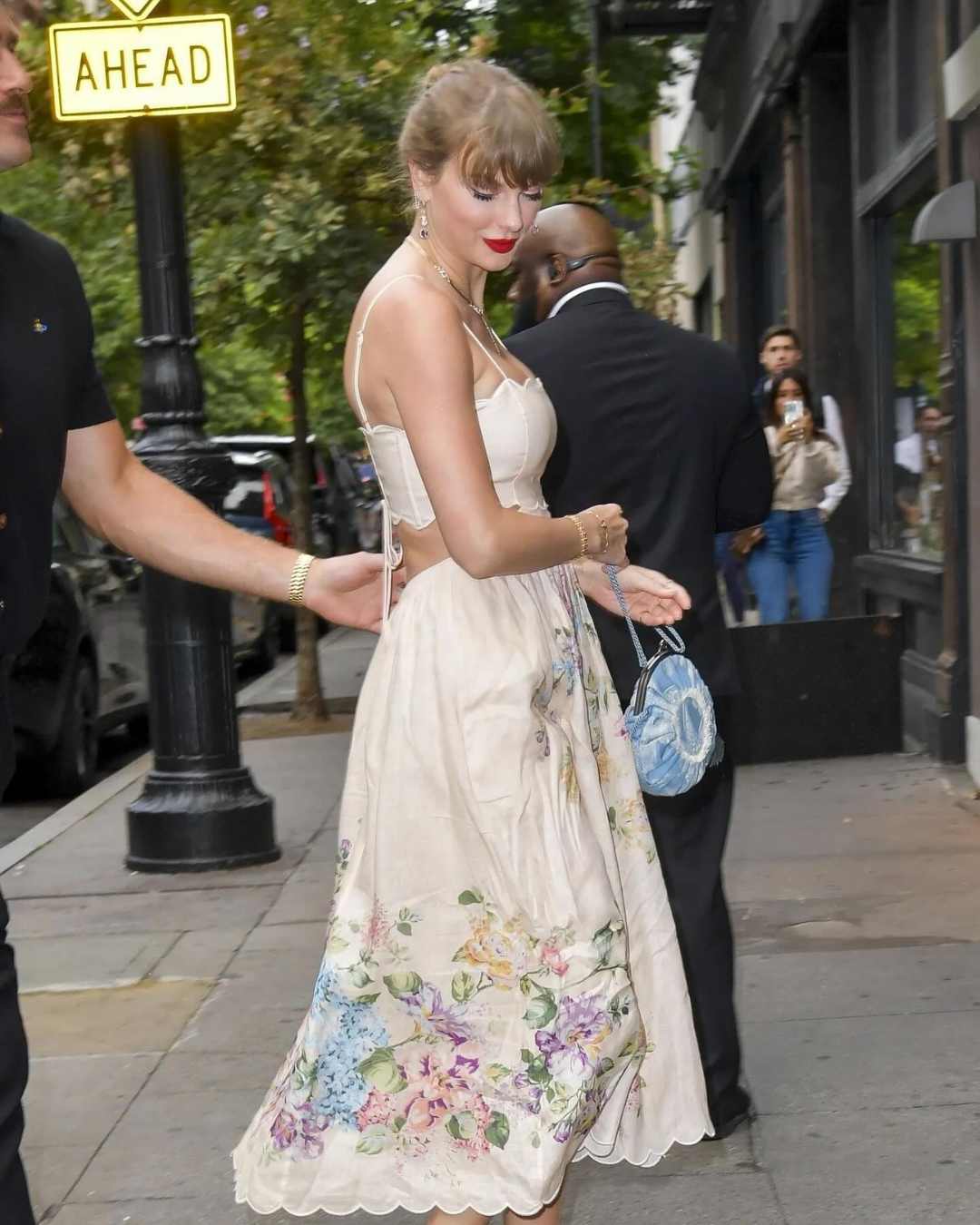
Navigating wedding guest attire is a notoriously difficult fashion tightrope. One must look elegant without being distracting, stylish without upstaging the bride. At Karen Elson and Lee Foster’s wedding, Taylor demonstrated exactly how to execute this with grace. She opted for a Zimmermann look that was a departure from her more structural stage wear, leaning instead into softness and romance.
The choice of Zimmermann was strategic. The Australian brand is synonymous with feminine detailing, floral motifs, and a kind of bohemian luxury that feels effortless. Swift’s look featured soft silhouettes and romantic detailing that allowed her to blend into the celebratory atmosphere while still maintaining her presence. It was quiet elegance personified.
This look is crucial to her style era because it shows her range. We are used to seeing her as the star, the focal point. Here, she stepped back into a supporting role, and her fashion reflected that shift in dynamic. There was no shouting, no neon, no sequins. Just beautiful fabric, impeccable fit, and a color palette that whispered rather than screamed.
Edinburgh Pop Palette: Color Blocking and Energy
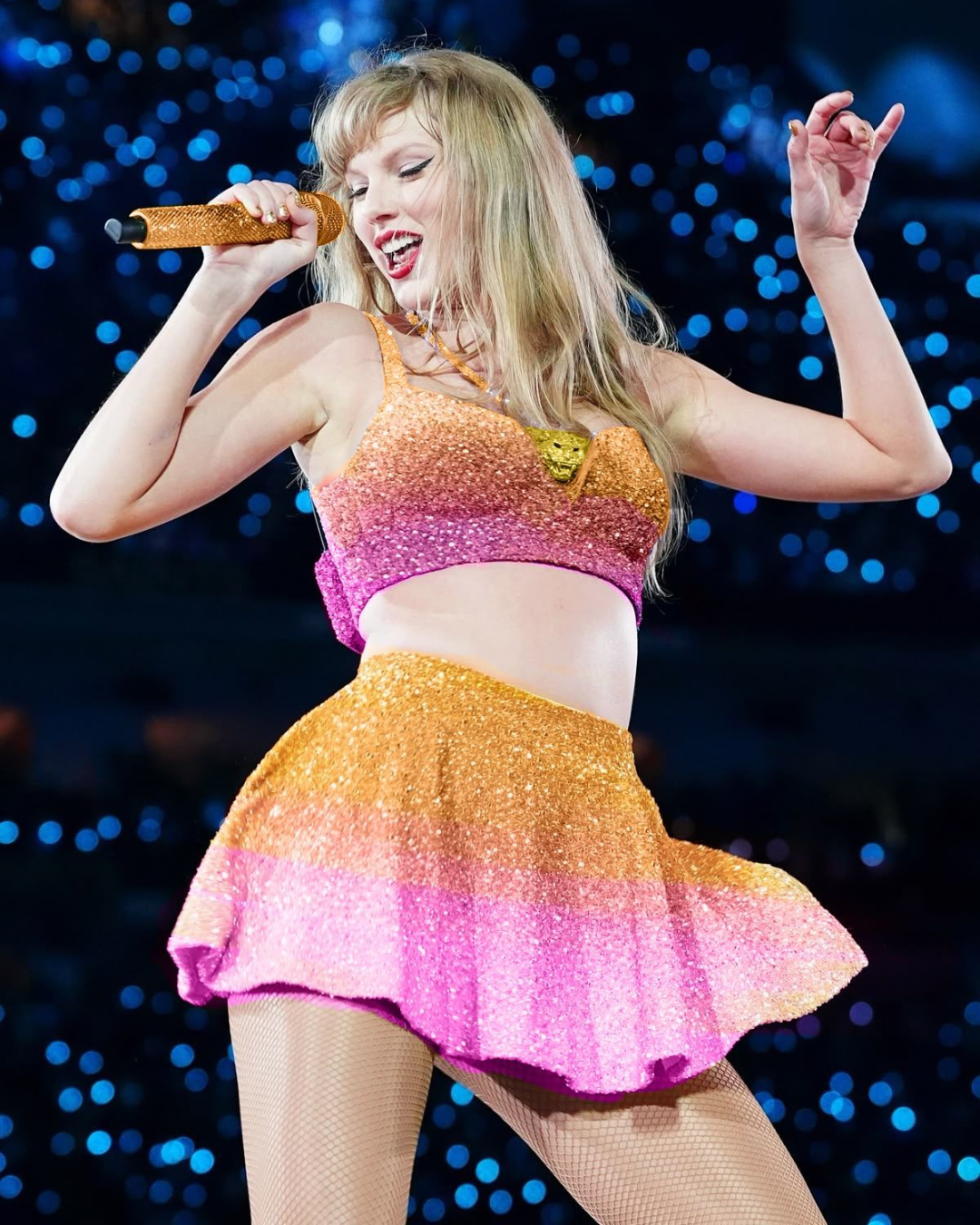
When the Eras Tour touched down in Edinburgh, Taylor reminded us that she is, at her core, a pop star. The "1989" section of the show has always been high energy, but the look she debuted in Scotland felt particularly vibrant. She embraced a bold color-blocking moment, pairing a yellow crop top with a sparkly pink mini skirt.
This combination was pure dopamine dressing. It was bold, energetic, and undeniably youthful. The clash of the yellow and pink was intentional—a visual representation of the frenetic, happy energy of pop music. It felt like a nod to the candy-colored aesthetics of the 2010s, yet tailored perfectly to fit the current tour's polished standards.
This look defined her era by reinforcing her ability to adapt visuals to the location and the audience's mood. Edinburgh brought a specific energy, and she matched it. It also highlighted a key aspect of her style evolution: the willingness to have fun with color. In a fashion landscape that often prizes neutrals and "quiet luxury" beige, Swift is never afraid to embrace the rainbow.
The look also served a functional purpose. The separate pieces allowed for maximum movement, essential for the choreography of that segment. But beyond utility, it was a visual refresher. In a show filled with darker, moodier sections, this burst of yellow and pink acted as a palate cleanser. It woke up the eyes. It signaled a shift in tone. It proved that her style era is not monolithic; it contains multitudes, from the gothic to the bubblegum, and she wears both with equal conviction.
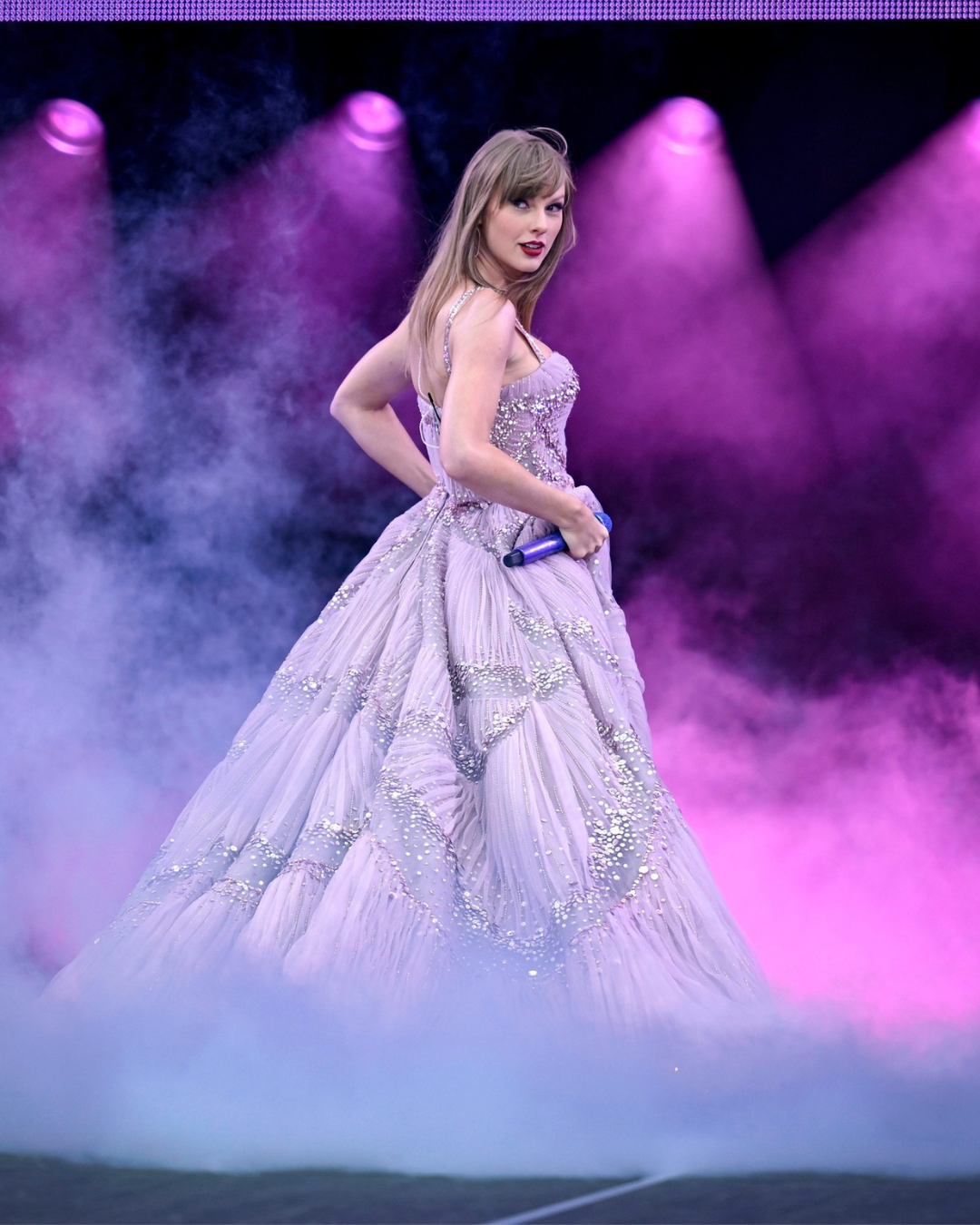
Princess Glow Moment: A Fairytale in Scotland
In stark contrast to the pop palette, another Edinburgh moment saw Taylor lean fully into the fairytale aesthetic that has long been associated with her brand. During the "Enchanted" segment, she donned a custom Reem Acra gown that transformed the stadium into a storybook setting.
Reem Acra is known for bridal and evening wear that borders on the ethereal, and this gown was no exception. It featured structured sparkle on the bodice that transitioned into a flowing, voluminous silhouette. It brought classic red carpet drama into a live performance environment. As she moved, the dress moved with her, creating a sense of fluidity and grace that was mesmerizing to watch.
This look is significant because it acknowledges her roots. Swift’s early career was defined by princess dresses and ballgowns. By revisiting this silhouette in 2024, she isn't regressing; she is reclaiming. She is showing that you can grow up without letting go of the magic. The "Princess Glow" is not about being a damsel; it is about being the queen of your own narrative.
The juxtaposition of this gown against the massive, industrial stage setup of the Eras Tour created a powerful visual tension. It was softness against steel. It was fantasy against reality. This fluidity is what keeps her audience captivated. We never know exactly which version of Taylor we are going to get, but we know it will be executed with precision.
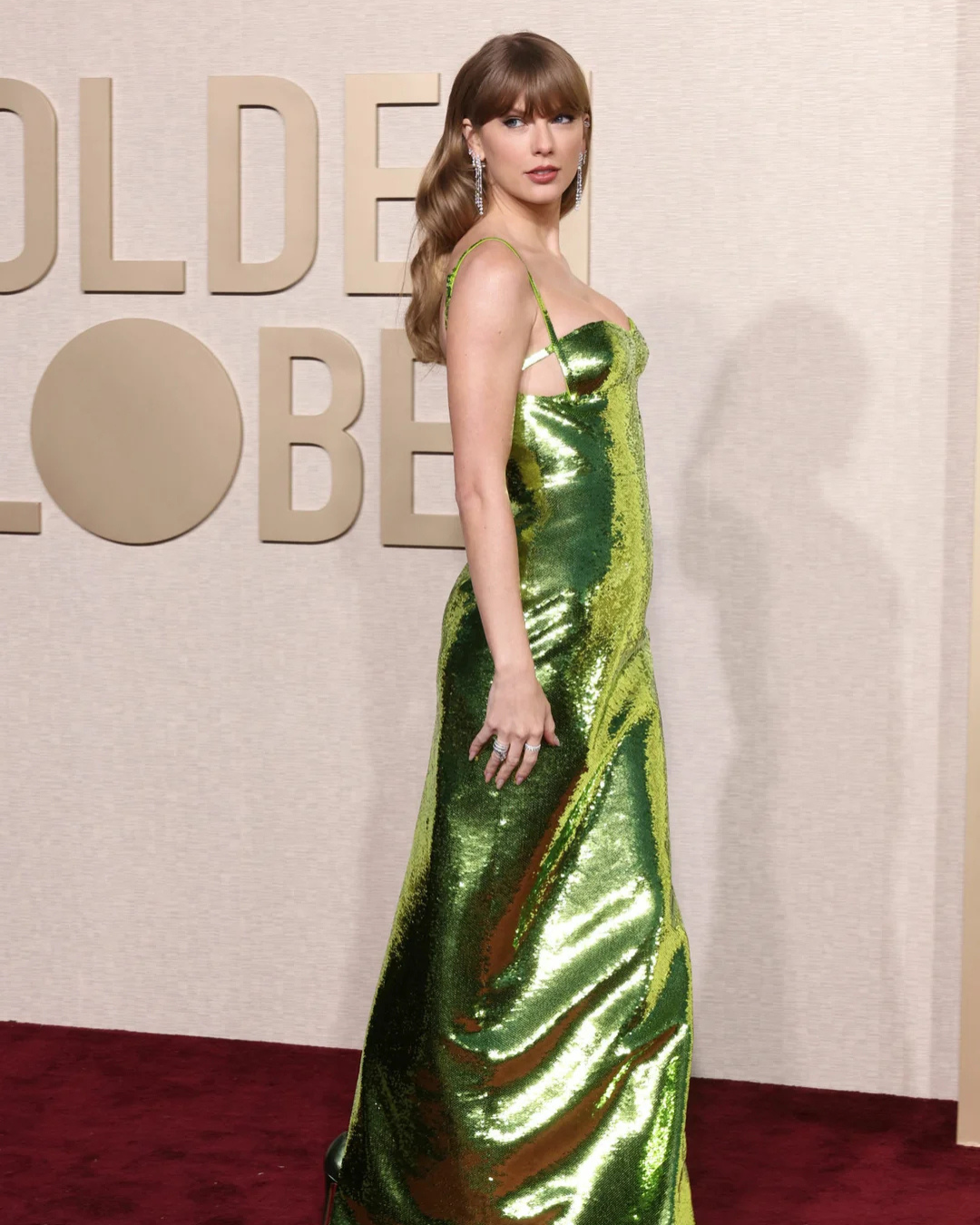
Golden Globes Radiance: The Green Gucci Snake
The red carpet is a different beast entirely. It requires a different kind of armor. At the Golden Globes, Taylor arrived ready to do battle, looking polished, modern, and camera-ready in a green metallic Gucci dress.
The choice of green was immediately dissected by fans and fashion critics alike. In the Swiftian universe, green is the color of Reputation, her snake-motif era. Wearing a shimmering, scale-like green gown to a major awards show was seen by many as a subtle nod to upcoming re-recordings. Whether that was the intent or not, the effect was undeniable. She looked dangerous, sleek, and powerful.
Paired with Christian Louboutin shoes, the look was a departure from the safe, pretty gowns often seen on the Globes red carpet. The metallic fabric caught the flashbulbs in a way that made her look like she was glowing from within. It was liquid metal. The silhouette was simple—a column dress with a strappy back—but the texture did all the talking.
This look defined her style era by reinforcing her position as a red carpet mainstay who is not afraid to take risks. It wasn't a "safe" dress. It was a statement piece. It blended the modernity of Gucci with the personal lore of Taylor Swift. It showed a woman who is comfortable in the spotlight, who knows how to pose, and who understands the power of an image. It exuded a "serpentine" elegance—cool to the touch, beautiful to behold, and commanding of respect.
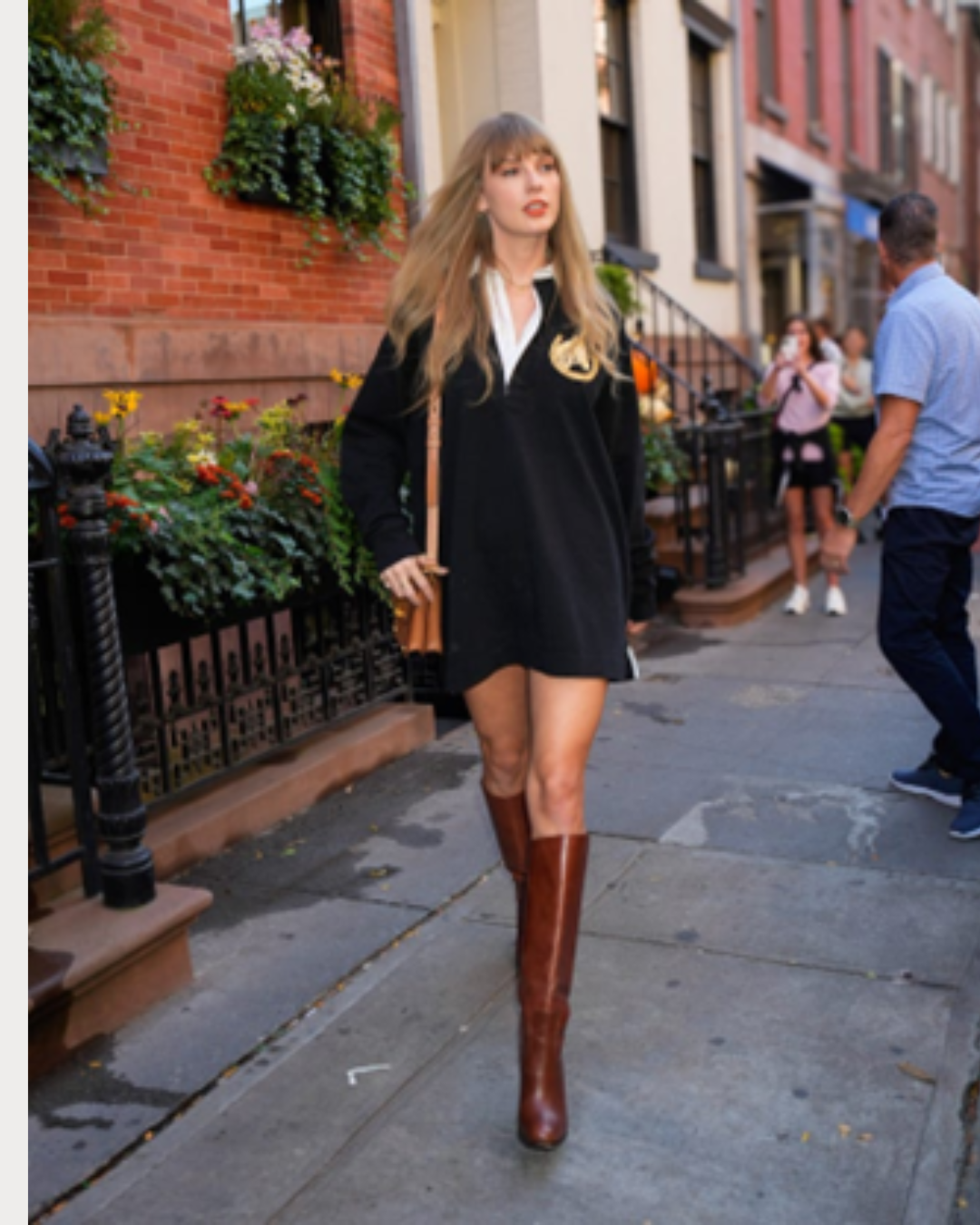
NYC Street Style Takeover: The Rugby Shirt
While the red carpets and stadiums provide the fantasy, it is the streets of New York City that provide the reality. And recently, Taylor’s off-duty style has become just as influential as her stage wear. One particular look stands out: an oversized rugby shirt worn as a dress, paired with Prada boots and a corduroy hat.
This outfit went viral instantly, and for good reason. It was the epitome of "cool girl" ease. It turned a casual city outing into a fashion moment. The rugby shirt is a classic piece of prep-wear, often associated with masculinity and sport. By wearing it as a dress, she subverted the silhouette, making it playful and feminine.
The accessories were key here. The Prada boots added a touch of luxury and edge, grounding the look and keeping it from looking like loungewear. The corduroy hat added texture and a bit of mystery, shielding her eyes while adding a vintage vibe. It was a masterclass in high-low dressing.
Why did this define her era? because it was relatable yet elevated. It was a look that her fans could actually replicate. It wasn't a custom Versace bodysuit; it was a vibe that could be thrifted or bought. It signaled that her style era isn't just about unattainable luxury; it's about personal expression. It’s about taking a big shirt, putting on some great boots, and walking out the door with confidence. It captured the "girl next door" energy that made her famous, but updated for a woman who now owns the block.
Why Her Style Works: Intentionality and Narrative
So, what is the common thread? How does a green metallic Gucci gown exist in the same style universe as a rugby shirt and a beaded mini dress? The answer lies in intentionality.
Taylor Swift’s fashion succeeds because nothing is accidental. Each look is rigorously aligned with the context, the mood, and the narrative she is currently spinning. She does not chase trends for the sake of trends. You won't see her wearing something just because it walked a runway in Paris last week. She wears it because it serves the story.
This narrative-driven approach is what separates a fashion icon from a celebrity who just wears nice clothes. Swift uses fashion as a form of communication. When she wants to signal a new era, she changes her hair. When she wants to tease a song, she changes her color palette. When she wants to feel powerful, she wears structure. When she wants to feel romantic, she wears lace.
Her style works because it is an identity project. It invites the audience to read the clothes like tea leaves. It rewards attention. In a world of fast fashion and disposable trends, Swift’s wardrobe feels curated and permanent. Even her street style feels like costume design for the movie of her life.
Furthermore, her style is inclusive in its inspiration. While the brands might be luxury—Versace, Gucci, Prada—the aesthetic concepts are universal. "The Romantic," "The Edgy Pop Star," "The Cozy Intellectual." These are archetypes that anyone can tap into. She gives her fans permission to try on these different identities themselves.
This era of her style is defined by a supreme confidence. In her 20s, like many of us, her style was often about fitting in or finding her footing. In her 30s, her style is about knowing exactly who she is. There is a sense of relaxation in her recent looks, even the most glamorous ones. She isn't wearing the clothes to prove anything; she is wearing them because she enjoys them.
The Intersection of Music and Mode
It is impossible to discuss her style without acknowledging the music that drives it. The Midnights era brought a moody, 70s-inspired glamour. The Tortured Poets Department era has ushered in a wave of dark academia, greyscale, and structured tailoring. Her fashion is the visual equalizer to her sonic output.
This synergy creates a total artistic package. When you listen to the music, you can visualize the outfit. When you see the outfit, you can hear the song. This is branding at its most sophisticated level. It creates a seamless loop of consumption and appreciation for the fan.
The diversity of the looks we have discussed—from the Edinburgh Pop Palette to the Wedding Elegance—shows a refusal to be boxed in. The music industry often wants female artists to pick a lane: are you the sexy pop star? The serious songwriter? The girl next door? Taylor Swift uses fashion to say, "I am all of them."
Conclusion: The Icon Status
Taylor Swift has walked into a style era that will be referenced for decades. It is an era defined by range, precision, and joy. From the gravity-defying architecture of her tour outfits to the comfortable chic of her street style, she has mastered the art of visual storytelling.
She has taught us that fashion is a tool. It can be armor. It can be a celebration. It can be a disguise. But most importantly, it can be a mirror. Her clothes reflect a woman who is in control of her own image, writing her own rules, and looking fantastic while doing it.
As we watch her style continue to evolve, one thing remains clear: Taylor Swift isn't just wearing the clothes. The clothes are helping to tell the legend. And we are all watching, waiting to see what she wears next.


.png)