

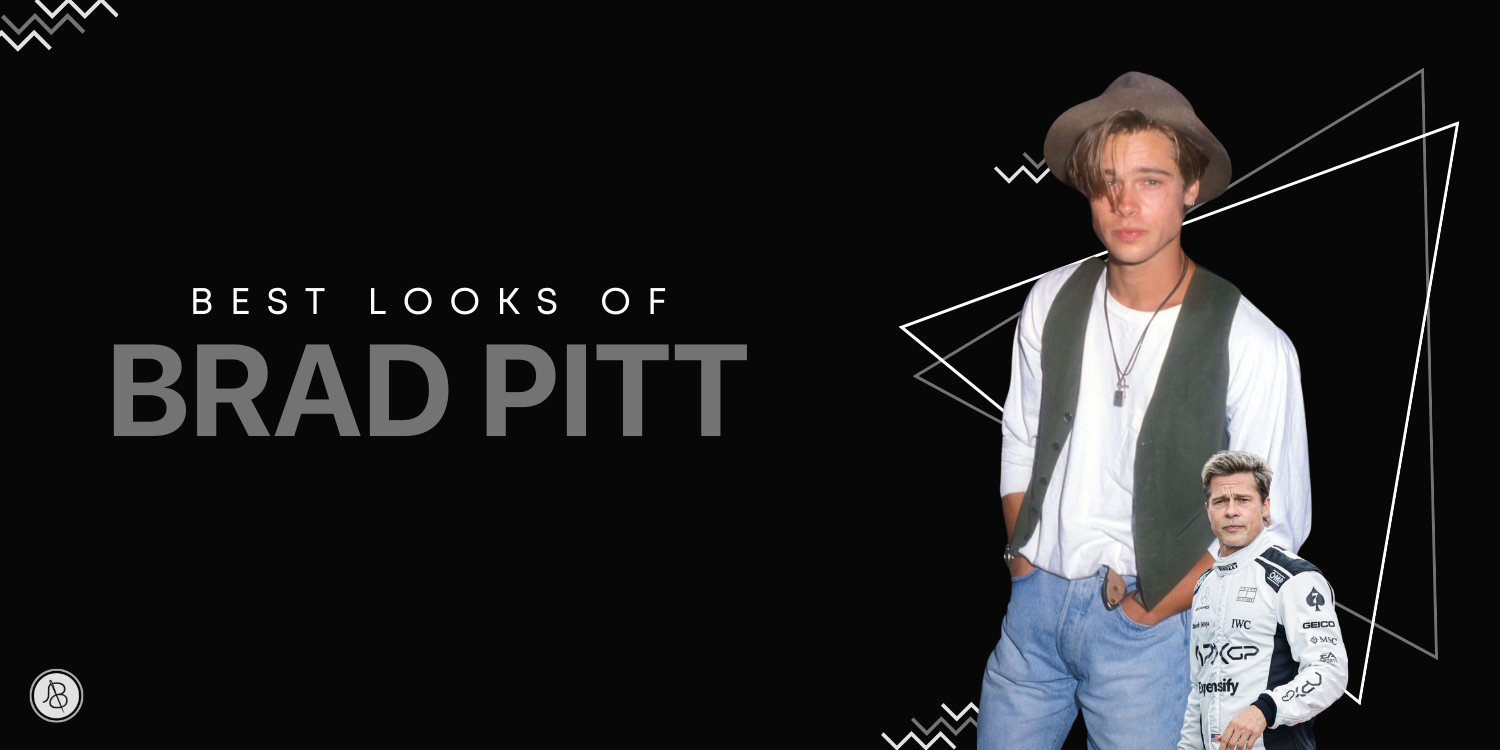
In the high-stakes ecosystem of Hollywood, longevity is the ultimate currency. Trends burn hot and fade fast. The "It Boy" of the moment is often replaced before the next awards season cycle begins. Yet, there are rare anomalies—figures who not only survive the shifting tides of culture but actively shape them. Brad Pitt is, undeniably, the archetype of this endurance.
For over three decades, he has maintained a cultural relevance that feels almost impossible. But to look at Brad Pitt simply as a movie star is to miss a crucial part of the narrative. We need to look at him as a visual storyteller. Across decades of red carpets, film festivals, paparazzi shots, and global press tours, his style evolution has mirrored something far deeper than just changing fashion trends. It has served as a real-time documentation of a man growing into himself.
His wardrobe is an autobiography written in denim, linen, and bespoke tailoring. It mirrors confidence, maturity, and a growing ease with self-expression that resonates deeply with today’s fashion enthusiasts. From the raw, unpolished energy of his early Hollywood beginnings to the understated, textural authority of his present day, Brad Pitt’s style journey offers a masterclass in how personal style deepens rather than disappears with time. This is not just about clothes; it is about the psychology of charisma.
The Early Years: The Architecture of Quiet Confidence
To understand the magnitude of Brad Pitt’s style legacy, we have to rewind to a landscape that looks vastly different from today’s curated Instagram feeds. The year is 1988. The setting is the premiere of Red Heat. The context is an era defined by excess—big shoulders, loud patterns, and the lingering, synthetic sheen of 80s glam.
And then there was Brad.
His appearance at the Red Heat premiere marked the quiet introduction of a new kind of Hollywood face. In a sea of performative fashion, his style was radical in its simplicity. He wore clean silhouettes and neutral tones. There was no desperate attempt to grab attention, no costume-like affectation designed to scream "look at me." Instead, the appeal came entirely from restraint.
This moment laid the foundation for what we now recognize as the "clean boy" aesthetic that dominates TikTok mood boards today. It was unfussy. It was grounded. The t-shirt fit perfectly, not because a stylist pinned it, but because he wore it with an ease that felt natural rather than curated. He understood, even then, that the clothes should never wear the man. This early phase was defined by a quiet confidence—the kind that doesn't need to shout to be heard. It was a lesson in minimalism before minimalism became a marketing buzzword.
1989: The Art of Unpolished Authenticity
By the following year, at a private album listening party in 1989, the narrative shifted slightly. If 1988 was about clean lines, 1989 was about texture and attitude. The look became more relaxed, more playful, and distinctly less polished.
This phase is crucial because it showed a young actor comfortable experimenting without the crushing weight of public expectation. The clothes felt lived-in. Leather jackets looked like they had actually seen the inside of a dive bar. Denim was worn, not distressed by a machine in a factory. This was the precursor to the grunge movement that would explode in the 90s, but on Pitt, it didn’t look like a trend he was chasing. It looked like his reality.
For the modern fashion enthusiast who values authenticity over logos, this era of Pitt is the holy grail. It represents a time when style was about personal identity, not brand deals. He wasn't a mannequin for a luxury house; he was a guy figuring out who he was, and doing it with an innate sense of cool that money simply cannot buy.
Claiming Leading Man Status: The 90s Blueprint
The early 1990s marked a pivotal turning point, both in his career and his closet. He was transitioning from "interesting character actor" to "global superstar," and his wardrobe adjusted to match the new altitude.
At the 1993 True Romance premiere, Brad Pitt’s style matured noticeably. The slouchy comfort of the late 80s was replaced by something sharper. Tailoring became a focal point. The fits were more intentional, highlighting a physique that was becoming famous worldwide. But even in this pivot to polish, he never lost that essential edge.
This era introduced a delicate balance between traditional Hollywood glamour and rugged charisma—a duality that would become the signature of his wardrobe for the next thirty years. He could wear a suit, but he would wear it with unbuttoned ease. He could do formal, but his hair would be delightfully chaotic. It was the beginning of the "imperfect perfection" that defines modern luxury.
1998: The Peak of 90s Minimalism
If you want to see the gold standard of 90s minimalism, look no further than the 1998 Meet Joe Black premiere. By this point, the balance was perfected.
This was the era of the oversized-yet-tailored suit—a silhouette that Gen Z has resurrected with fervor. Pitt’s look was defined by classic suits, precise tailoring, and refined grooming. The chaotic energy of the early 90s had settled into a sleek, undeniable elegance. His style was no longer about experimentation; it was about consistency. He had established a visual identity rooted in elegance and confidence.
There is a lesson here for the "Trend Chaser" archetype. Pitt didn't jump on every passing fad of the late 90s (and there were many questionable ones). He stuck to a palette and a silhouette that worked for him. He leaned into quality fabrics and timeless cuts. In doing so, he future-proofed his image. Photos from this night don't look dated; they look iconic. They could be dropped into a current GQ spread and look entirely at home. This is the power of finding your lane and owning it completely.
The Power of Simplicity: The Early 2000s
As the millennium turned, fashion entered a chaotic period. The early 2000s are often remembered for their stylistic excesses—trucker hats, bedazzled denim, and questionable layering. Yet, Brad Pitt navigated this minefield with his reputation intact, largely by doubling down on understated power.
In 2003, appearing alongside Jennifer Aniston at the Independent Spirit Awards, Pitt embodied a specific kind of American luxury. There was zero theatricality in his look. No excess. No noise. He favored neutral palettes—beiges, creams, soft greys—and clean cuts. His posture was relaxed, communicating an assurance that required no effort.
This period demonstrated a vital style principle: when you have nothing to prove, you don't need to dress loud. His clothes whispered wealth and taste rather than screaming it. This "stealth wealth" approach anticipated the "Quiet Luxury" movement by two decades. It was about the feel of the fabric, the drape of the pant, the way a simple white shirt interacted with a well-cut jacket. It was approachable yet aspirational, a difficult balance to strike.
For the modern observer, this era highlights the importance of context. He was one half of the world's most famous couple, under constant scrutiny. His response was to strip his style back to the essentials. It was a protective layer of simplicity in a chaotic world.
Festival Royalty and Intellectual Ease: The 2010s
By the time Brad Pitt appeared at the 2011 Cannes Film Festival for The Tree of Life, he had entered a new phase of life and a new tax bracket of style. He was no longer just a movie star; he was a serious producer, an artist, a father. His style evolved to reflect this gravitas.
This is where we see the emergence of what we can call "Intellectual Ease." The sharp, rigid tailoring of the Meet Joe Black era gave way to something softer, more tactile, and infinitely more interesting. We saw the introduction of linen textures, softer shoulders on jackets, and relaxed silhouettes that moved with the wind.
He began to accessorize with intention—thick-rimmed glasses, scarves, hats. These weren't affectations; they felt like the accoutrements of a man who reads, who thinks, who is comfortable with stillness. His presence at Cannes suggested a confidence rooted in experience rather than performance. He wasn't trying to look "hot"; he was just being himself, and coincidentally, that was incredibly stylish.
This shift mirrors the "Sentimental Archivist" concept but in the healthiest way. He wasn't clinging to his youth. He wasn't trying to dress like he did in Fight Club. He was dressing for the man he had become—a man of substance. The lesson here is about aging with grace. Instead of fighting time, he collaborated with it, allowing his style to soften and mature alongside him.
Modern Era: Charisma Without Effort (2020s and Beyond)
And now, we arrive at the present day. The 2020s have seen Brad Pitt enter perhaps his most fascinating style era yet. It is a period defined by joy, color, and a complete disregard for traditional gender norms in menswear.
In 2023, his appearance in Formula One gear for his upcoming racing film redefined contemporary masculinity in style. Seeing him in racing overalls, functional silhouettes, and minimal styling felt both modern and iconic. It tapped into the "workwear" trend but elevated it with star power. It was a reminder that confidence transcends categories. Whether in couture or utility wear, the key factor remained the same: authenticity.
But we must also acknowledge the Bullet Train press tour, where he famously wore a linen skirt on the red carpet. For a generation that values inclusivity and fluidity, this was a massive moment. It wasn't a PR stunt; it was a man in his late 50s saying, "Why not?" It was fun. It was funky. It was a rejection of the stiff, boring suit uniform that traps so many men of his stature.
This modern era is characterized by bold colors—greens, pinks, oranges—that he previously avoided. It’s looser, baggier, more comfortable. It screams, "I made it, and now I’m going to have fun." It connects deeply with Gen Z because it prioritizes personal happiness and expression over rigid rules. He is wearing the clothes; the clothes are absolutely not wearing him.
Decoding the Archetype: Why We Are Obsessed
Why do we care so much? Why is a timeline of Brad Pitt’s outfits worth 2500 words of analysis? Because his closet is a personality test that he has passed with flying colors.
If we look at the archetypes of style, Pitt manages to blend the best of them while avoiding their traps.
But most importantly, he avoids being the "Almost-There Stylist." He commits. When he does a look, he does it fully. Whether it’s the grunge of the 90s or the neon linen of the 2020s, there is no hesitation. That lack of hesitation is what we perceive as charisma.
Why Brad Pitt’s Style Endures
Brad Pitt’s fashion legacy is not about specific trends. We won't remember him just for the leather jackets or the linen suits. It is about evolution.
Most celebrities get stuck. They find a look that works for them at their peak, and they freeze it in amber, dressing the same way at 50 as they did at 25. It’s a desperate attempt to hold onto a moment. Pitt has done the opposite. He has allowed his exterior to change as his interior life changed.
Each phase of his style reflects where he was in life, emotionally and professionally.
He adapted without abandoning himself. He refined without erasing his personality. He matured without losing his magnetism. That consistency is what makes his style timeless. Different decades. Different silhouettes. The same unmistakable presence.
The Takeaway for the Modern Enthusiast
So, what can the modern fashion enthusiast—the Gen Z vintage hunter, the Millennial sustainable shopper—learn from Brad Pitt?
1. Authenticity is the only trend that matters.
Pitt has worn everything from thrift store tees to bespoke Brioni suits. He looked cool in both because he felt like himself in both. If you don't feel right in it, don't wear it. The camera (and the mirror) knows when you're lying.
2. Quality over quantity.
Throughout his career, even in his "grunge" phases, the materials were good. Leather, denim, linen, wool. He invests in fabrics that age well. For a generation focused on sustainability, this is the blueprint. Buy things that will look better in ten years than they do today.
3. Evolution is healthy.
Don't be afraid to change your style as you change as a person. The clothes you loved at 20 might not serve you at 30, and that’s okay. Your closet should be a living document, not a static monument.
4. Comfort is confidence.
Look at Pitt’s posture in photos from any decade. He looks comfortable. He can move. He isn't being strangled by his collar or tripping over his hem. When you are physically comfortable, you project psychological ease. That ease is the secret sauce of his charisma.
Final Thoughts
In a world of fast fashion and algorithm-driven trends, Brad Pitt stands as a testament to the slow burn. He reminds us that true style isn't about buying the "right" things; it's about knowing who you are and finding the things that amplify that truth.
His timeline is a map of a life well-lived and well-dressed. From the fresh-faced kid in 1988 to the bucket-hat-wearing icon of today, the message has remained consistent: The clothes are just the costume. The man inside them is the character. And if the character is interesting, the clothes always will be too.
Brad Pitt: Then, Now, Always. It’s not just a headline. It’s a fact. And as long as he keeps getting dressed, we’ll keep taking notes.
This analysis of Brad Pitt's style evolution highlights the intersection of celebrity culture, personal growth, and fashion history. For more insights into iconic style and how to curate your own authentic wardrobe, stay tuned to our blog.
Deep Dive: The Anatomy of the 2023 F1 Look
To truly understand the "Now" phase of Brad Pitt, we have to zoom in on the specific details of his recent Formula One aesthetic. This wasn't just a costume for a movie; it became a street style moment that permeated blogs and mood boards instantly.
The look consisted of racing overalls, yes, but also the off-duty gear: the quilted jackets, the technical fabrics, the aviator sunglasses that felt vintage yet modern. This taps into the "Bloke Core" and "Gorpcore" trends that have swept through youth culture. It’s the appreciation of functional, utilitarian clothing recontextualized as high fashion.
When Pitt steps out in a jumpsuit or a technical vest, he validates the idea that fashion doesn't have to be delicate to be high-end. It can be rugged. It can be durable. This resonates with a generation that thrifts Carhartt jackets and North Face fleeces. It bridges the gap between the blue-collar functionality of the garments and the high-status world of Hollywood.
Furthermore, his grooming in this era deserves a mention. The slightly scruffy beard, the hair that is styled but not "done"—it reinforces the rejection of the hyper-polished, filtered aesthetic that dominates social media. It tells the audience: "I am real. I have texture. I am human." In an age of AI filters and Facetune, seeing the texture of a 60-year-old icon is a radical act of authenticity.
The Influence on Gen Z Masculinity
Perhaps the most surprising aspect of Pitt's style journey is how relevant he remains to men (and women) half his age. He is not dressing like a "cool dad" trying to fit in with the kids. He is dressing like a man who understands the fluidity of modern fashion.
His embrace of color—stepping out in bright green suits and orange polos—challenges the stoic, grey-and-black uniform of traditional masculinity. He is showing that it is okay for men to be vibrant, to be soft, to be playful.
The linen skirt moment in Berlin was the pinnacle of this. When asked why he wore it, he simply said, " The breeze. The breeze is nice." That answer encapsulates his entire philosophy. It wasn't a political manifesto. It wasn't a calculated PR move to court the LGBTQ+ demographic. It was a practical, sensory decision made by a man who is secure enough in his masculinity to wear a skirt if it’s hot outside.
That level of security is magnetic. It draws in the Gen Z audience who are actively dismantling gender binaries in fashion. They see in Pitt an ally, an elder statesman of cool who gets it without having to try too hard.
A Legacy of Textures
Finally, if we look at the timeline from 1988 to today, the one through-line is texture. Pitt has always had an affinity for fabrics that have life in them.
He understands that on camera and in person, flat fabrics look boring. Texture adds dimension. It invites the eye to linger. It makes the outfit look touchable. For the fashion enthusiast building their own wardrobe, this is a master tip: vary your textures. Don't just wear cotton on cotton. Mix the rough with the smooth, the shiny with the matte. It creates visual interest without needing loud prints or logos.
Brad Pitt’s closet is a masterclass in this textural interplay. It’s tactile. It’s real. And it’s why, no matter the decade, he always looks like the most interesting person in the room.
In conclusion, the timeline of Brad Pitt’s style is a timeline of our own cultural relationship with celebrity and fashion. We watched him grow up, and in doing so, we watched the definition of "cool" shift and expand. He led us from the rigid expectations of the leading man to the liberated, expressive freedom of the modern icon. He taught us that the best thing you can wear is your own truth—preferably tailored to perfection, but always worn with a little bit of ease. That is a lesson that will never go out of style. Then. Now. Always.