

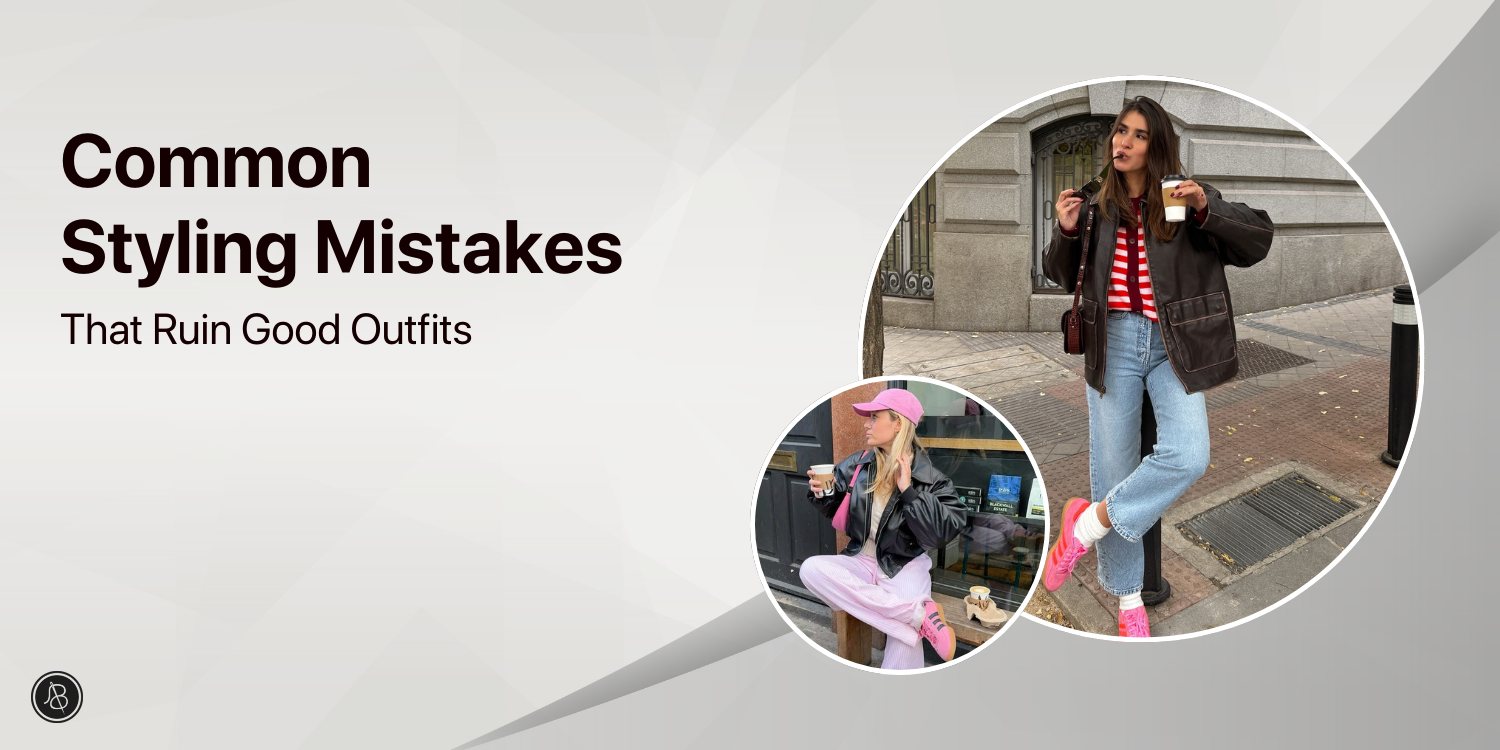
We have all been there. You stand in front of a mirror, fully dressed in items you know are objectively "good." The jeans are expensive. The top is trending on TikTok. The shoes are fresh out of the box. And yet, when you look at the reflection staring back at you, something feels… off.
The outfit doesn't sing. It doesn't flow. It feels disjointed, clumsy, or just plain underwhelming. You start to question your taste. You wonder if you need to buy more clothes. You spiral into a "nothing to wear" panic, despite standing in front of a closet that is bursting at the seams.
Here is the hard truth: You don’t need more clothes. You likely don’t even need "better" clothes. The problem isn’t the merchandise; it’s the method.
Most style problems do not come from what you buy. They come from how you put things together. Styling is a skill, separate from shopping. You can be an excellent shopper and a terrible stylist. The good news? Styling is learned. It is a series of small, intentional decisions that turn a pile of fabric into a cohesive look.
In this deep dive, we are going to dismantle the most common styling mistakes that quietly ruin good outfits. These are the subtle errors that make expensive clothes look cheap and great pieces look awkward. By identifying them—and learning how to fix them—you can transform your wardrobe without spending a single dollar.
1. Wearing Good Pieces With No Clear Base
The first and perhaps most frequent mistake is the "Kitchen Sink" approach. This happens when you have too many "hero" pieces fighting for the spotlight.
An outfit is like a movie cast. You need a lead actor, maybe a strong supporting actor, and then you need extras. If everyone tries to be the lead, the result is chaos. When you wear a statement top, patterned pants, bold shoes, and a heavy jacket all at once, the eye doesn't know where to rest. The outfit feels noisy.
The Problem of Visual Noise
When everything competes for attention, nothing looks intentional. It looks like you put on every cool thing you own because you couldn't decide. Even luxury pieces can look messy without a base to ground them.
Imagine a beautiful, intricate architectural top. It has ruffles, volume, and a bold print. If you pair that with distressed jeans, chunky sneakers, and a patterned bag, the beauty of the top gets lost in the clutter. It’s visual static.
The Fix: The Anchor Piece Theory
Strong outfits usually start with one simple foundation—an anchor. This is the neutral ground upon which the outfit is built.
Think of your "basics"—the white tee, the black slack, the slip dress—not as boring items, but as the canvas. Without the canvas, the paint has nowhere to go. Next time you feel like an outfit is "too much," try removing one statement piece and replacing it with a neutral anchor. Watch how the remaining statement piece suddenly pops with clarity and elegance.
2. Ignoring Fit Because the Item Is Trendy
We live in a trend cycle that moves at the speed of light. One week it’s oversized blazers, the next it’s micro-minis. The pressure to participate in these trends can lead to the second major mistake: sacrificing fit for relevance.
No trend survives a bad fit. It doesn’t matter if it’s the "it" item of the season; if it pulls across your hips, drowns your frame, or cuts off your circulation, it will not look stylish. It will look like you are wearing someone else’s clothes.
The Trap of "Making It Work"
We’ve all bought something in the wrong size because it was the last one left on sale, or because the brand’s sizing didn’t align with our body type, but we wanted the look anyway. We tell ourselves, "I'll just belt it" or "I'll only wear it sitting down."
This is a fallacy. Discomfort is visible. When clothes don’t fit, you fidget. You tug at the hem. You adjust the waistband. That physical unease translates to visual awkwardness. You lose the "effortless" vibe immediately because you are putting in so much visible effort just to keep the garment on your body.
The Fix: Silhouette Over Size
Style isn’t about size. It’s about shape. A well-fitted basic from a thrift store will always look more expensive than an ill-fitting designer piece.
Understanding proportion is key here.
Don’t be afraid of the tailor. A $15 hem adjustment can make a $50 pair of pants look like they cost $200. If a trend doesn't suit your body architecture, skip it. Confidence looks better than any viral aesthetic.
3. Styling Every Outfit the Same Way
Humans are creatures of habit. We find a formula that works—say, skinny jeans and a sweater—and we stick to it. While having a uniform is great, getting stuck in a styling rut is the third mistake.
When every outfit follows the same formula, even good clothes start looking repetitive and boring. This often happens without us noticing. We default to the same tuck, the same cuff roll, the same shoe pairing. Your wardrobe has range, but if you style everything identically, you flatten that range into a single note.
The "Default Mode" Syndrome
Do you always wear your shirts untucked? Do you always wear sneakers with dresses? Do you always wear the same gold hoops?
This repetition makes your style feel stagnant. It’s like eating the same meal for dinner every night. It’s nourishing, sure, but it’s not exciting. You stop seeing the potential in your clothes because you’ve decided they only work one way.
The Fix: The One-Element Shift
You don't need a makeover. You just need to tweak one variable.
Challenge yourself to wear your favorite piece in three completely different ways. Wear that summer dress with a turtleneck underneath in winter. Wear that suit jacket with bike shorts. Breaking your own rules breathes new life into old clothes.
4. Over Accessorizing to “Fix” the Outfit
Accessories are the spices of styling. Used correctly, they enhance the flavor. Used poorly, they ruin the dish.
A common mistake when an outfit feels "blah" is to pile on accessories in an attempt to save it. You add a belt. Then a hat. Then a scarf. Then statement earrings. Then a stack of bracelets.
The "Decorating the Christmas Tree" Effect
Accessories are meant to support an outfit, not rescue it. If the base outfit isn’t working—if the proportions are off or the colors clash—no amount of jewelry will fix it. In fact, adding clutter usually highlights the problem.
Over-accessorizing creates a costume effect. It looks performative. It suggests insecurity, as if you are hiding behind layers of stuff.
The Fix: The Power of Editing
Coco Chanel famously advised looking in the mirror and taking one thing off before leaving the house. This advice holds up.
One strong accessory does more than five average ones.
Ask yourself: What is this accessory adding? Is it creating balance? Is it tying colors together? Or is it just there because you felt like you "should" add something? If it doesn't have a purpose, it's just noise. Edit ruthlessly.
5. Not Dressing for the Occasion Properly
You can have the most beautiful outfit in the world, but if you wear a ballgown to a dive bar, it’s a bad outfit. Why? Because style is contextual.
The fifth mistake is a disconnect between the clothing and the environment. This works both ways: being severely underdressed or awkwardly overdressed.
The Context Disconnect
Wearing party silhouettes (sequins, high heels, rigid fabrics) to casual, relaxed settings can make you look stiff and out of touch. Conversely, wearing gym-wear or overly casual loungewear to a polished environment (a nice dinner, a meeting, a theatre show) signals a lack of effort or respect for the occasion.
It’s not about rigid rules or old-fashioned etiquette. It’s about energy. Your outfit contributes to the vibe of the room. When you are misaligned with that vibe, you create friction. You feel uncomfortable, and often, the people around you feel a subconscious disconnect too.
The Fix: Read the Room (Before You Enter)
The best-dressed people understand where they are going before deciding what they are wearing.
If you aren't sure of the dress code, the safest bet is "Smart Casual." It’s the sweet spot—polished but relaxed. Think clean lines, quality fabrics, and comfortable footwear. When in doubt, it is usually better to be slightly overdressed than underdressed, but the goal is harmony with your environment.
6. Buying Pieces Without Knowing How They’ll Be Styled
This is the silent killer of wardrobes everywhere. It is the reason you have a closet full of clothes and "nothing to wear."
You see a stunning skirt on sale. It’s neon green with feathers. You love it. You buy it. You get it home, and you realize you own absolutely nothing that goes with neon green feathers. It hangs in your closet, tags on, mocking you for three years.
The "Orphan Item" Phenomenon
Buying individual items without considering the ecosystem of your wardrobe leads to a collection of orphans—lonely pieces that don’t play well with others.
We often buy for the fantasy version of ourselves. We buy for the imaginary gala, the hypothetical vacation, the person we wish we were. But we have to dress the person we actually are, for the life we actually live.
The Fix: The Rule of Three
Before you buy anything—no matter how cheap or how beautiful—you must pass the Rule of Three.
Can you wear this item with three things you already own?
If the answer is no, put it back. Unless you are willing to buy an entire new outfit to support that one item, it’s a bad investment. Good wardrobes aren’t built item by item. They are built outfit by outfit. Focus on cohesiveness. A smaller wardrobe where everything mixes and matches is infinitely more stylish than a massive wardrobe of disjointed pieces.
7. Overthinking Instead of Planning
The final mistake happens in the mind, not the mirror. It is the stress of the morning rush.
Standing in front of a closet at 7:45 AM, half-awake, panic-stricken, trying to "figure it out" is a recipe for disaster. This is when we make bad choices. We grab the wrinkled shirt. We pick the pants that are uncomfortable. We throw on the shoes that don't quite match because we can't find the right ones.
The Clarity Deficit
The problem isn’t a lack of clothes. It’s a lack of clarity. Creativity requires space, and a rushed morning routine provides zero space.
When you force styling decisions under time pressure, you default to the path of least resistance (see Mistake #3) or you make erratic choices that result in the "Kitchen Sink" look (see Mistake #1). You leave the house feeling unsettled, and that energy carries through your whole day.
The Fix: Digital or Mental Planning
Treat your outfits like a project. Plan them.
When outfits are planned, getting dressed becomes a ritual, not a race. You step into your clothes with intention. You know they fit, you know they match the occasion, and you know you look good. That psychological shift is massive.
Bonus: Ignoring the Importance of Grooming
While not strictly "clothing," grooming is the invisible accessory that makes or breaks a look.
You can wear a $5,000 suit, but if your hair is unwashed, your nails are dirty, and your clothes are wrinkled, the outfit fails. Conversely, you can wear a $20 t-shirt and jeans, but if your skin is glowing, your hair is neat, and your clothes are steamed, you look expensive.
The Polish Factor
Styling doesn't stop at the fabric.
These small details signal that you take care of yourself. They add a layer of polish that no logo can replicate.
Conclusion: Intentionality is the Ultimate Style Hack
If you look back at this list, you will notice a common theme. None of these mistakes are about money. None of them are about not owning the latest "it" bag.
They are all about intentionality.
Most outfits fail quietly. They fail because the decisions were rushed. They fail because we didn't check the mirror for proportions. They fail because we bought a fantasy instead of a reality. They fail because we let the clothes wear us, instead of us wearing the clothes.
Fixing these mistakes requires a shift in mindset. It requires slowing down. It requires being honest about fit. It requires editing.
Once you start styling smarter, your closet changes. You stop seeing a pile of "nothing to wear" and start seeing endless possibilities. You realize you have enough. You have always had enough. You just needed to learn how to see it.
So, the next time you get dressed, take a breath. Look in the mirror. Ask yourself: Is there a base? Does it fit? Is it appropriate? Do I feel like me?
If the answer is yes, walk out that door. You look fantastic