
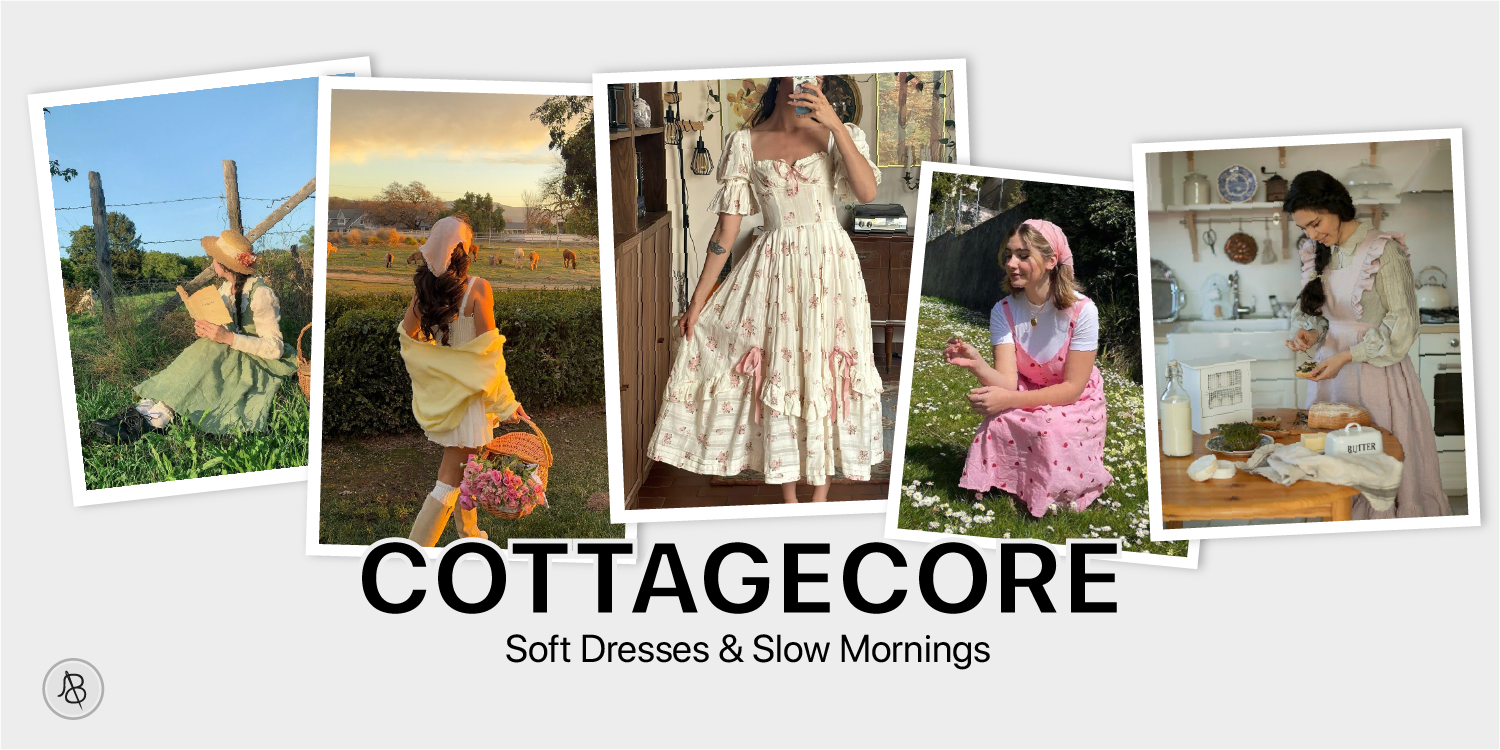
Cottagecore is not merely a fashion trend; it is a holistic lifestyle movement. It creates a sanctuary where the biggest problem is watering the plants and the loudest sound is the purr of a cat. For the modern fashion enthusiast, it offers a unique intersection of style, sustainability, and self-care. It suggests that what we wear can be a tool for grounding ourselves—a way to signal our values and protect our peace.
This exploration delves into the anatomy of this soft escape. We will trace its origins as a digital subculture, analyze its explosive rise during global lockdowns, dissect the sartorial codes of peaceful fashion, and understand why, in a world that demands speed, we are collectively craving the slow.
The Fantasy: Living in the Woods
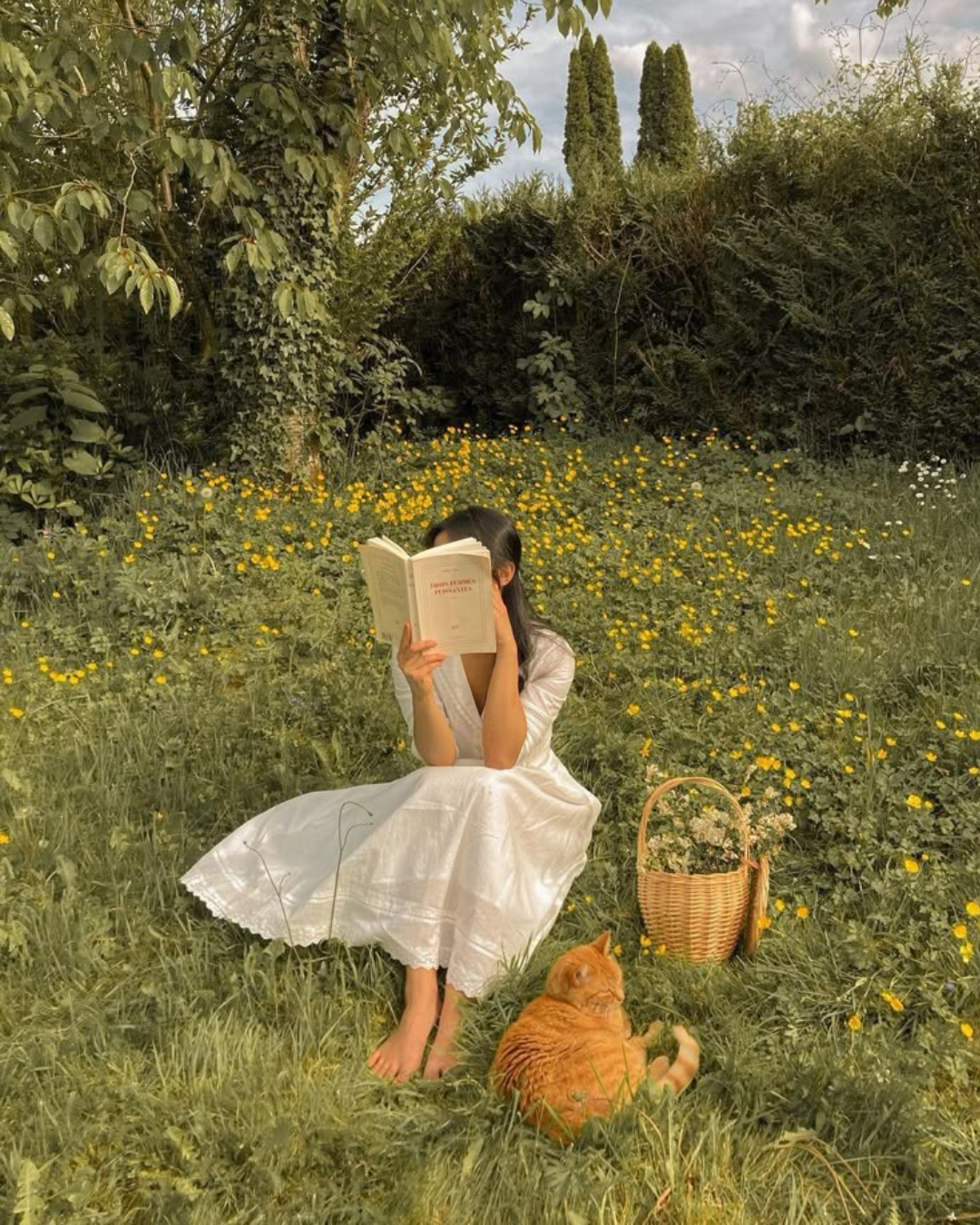
At its most fundamental level, Cottagecore is a fantasy of isolation—but a specific, curated kind of isolation. It is not the rugged, survivalist isolation of a cabin in the wilderness; it is the cozy, domestic isolation of a storybook cottage. It is the aesthetic for people who want to escape life, but bring their creature comforts with them.
The imagery is potent and specific. It is sunlight filtering through linen curtains. It is a stack of second-hand books on a wooden table. It is the smell of vanilla and dried herbs. And, almost invariably, it involves a cat. The cat is the perfect mascot for the movement: a creature that values comfort above all else, moves at its own pace, and exists in a state of perpetual, unbothered grace. To live like the cat is the goal.
This fantasy appeals deeply to a generation experiencing high levels of digital burnout. Gen Z and Millennials have grown up online, performing their identities for an audience since adolescence. The woods represent a place where there is no audience. In the cottage of our imagination, there is no need to optimize, monetize, or perform. You simply exist.
Origins: The Soft Rebellion Against Hustle
Before Cottagecore dominated TikTok feeds and high-street window displays, it was fermenting in the quiet corners of the internet. Its roots trace back to the mid-2010s on platforms like Tumblr, where users began curating mood boards that rejected the dominant cultural narrative of the time.
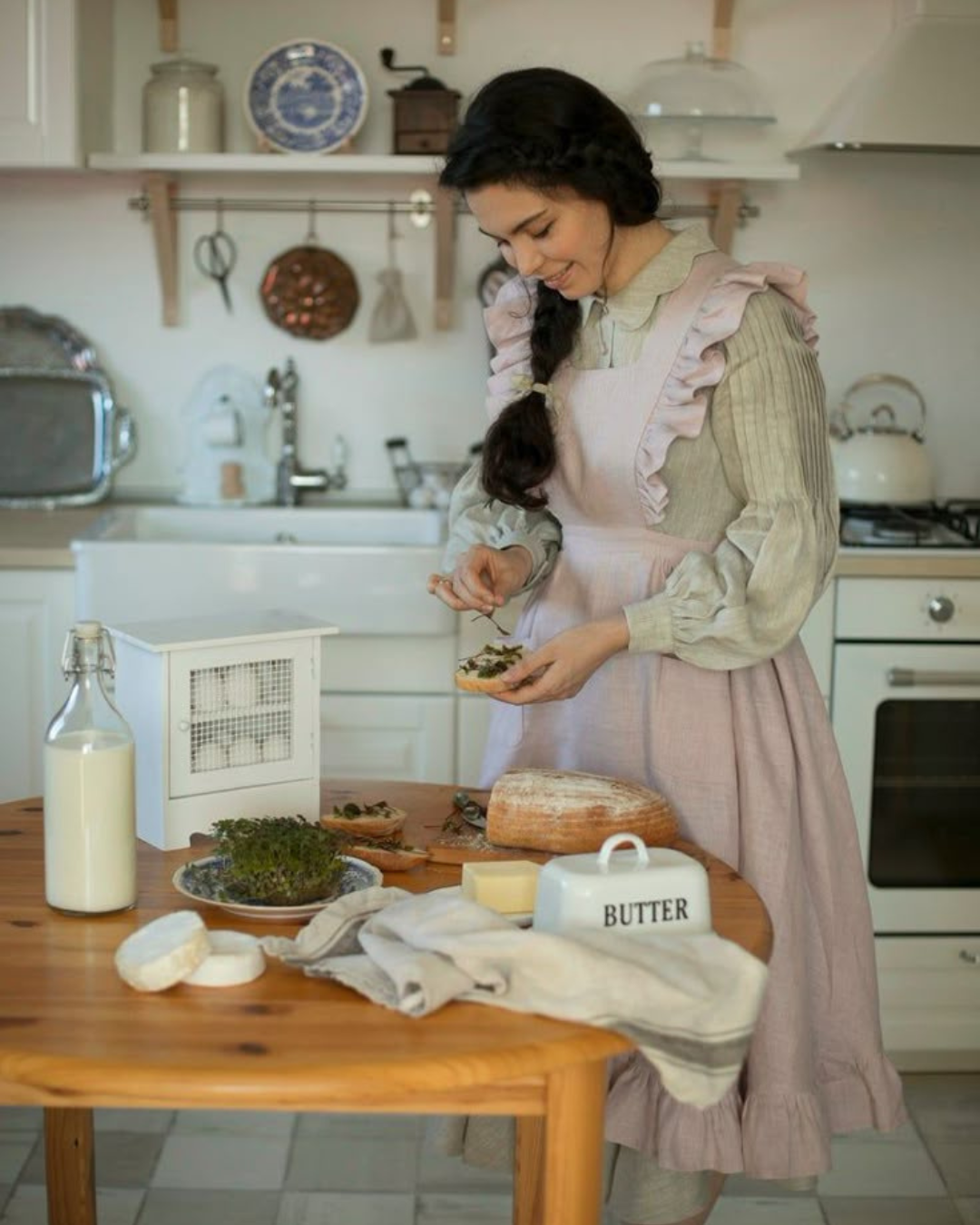
Cottagecore emerged as a soft rebellion against this ethos. It asked: "What if we stopped hustling and just baked bread in pretty dresses?" It was a radical proposition. To choose slowness in a culture obsessed with speed is an act of defiance. To choose softness in a world that rewards hardness is an act of bravery.
It also drew heavily from romanticized versions of history—specifically the Victorian and Edwardian eras—but stripped of their rigid social constraints. It was a remix of the past, filtered through a modern lens of inclusivity and comfort. It wasn't about actually returning to the 19th century (with its lack of antibiotics and civil rights); it was about borrowing the aesthetic of a slower time to soothe modern anxieties.
This early iteration of the movement was largely insular, a niche subculture for introverts and dreamers. It was a digital safe space where kindness and gentleness were the currency. Little did these early curators know, they were building the visual language for a global coping mechanism that would soon be desperately needed.
Viral Rise: Lockdown and the Domestic Universe
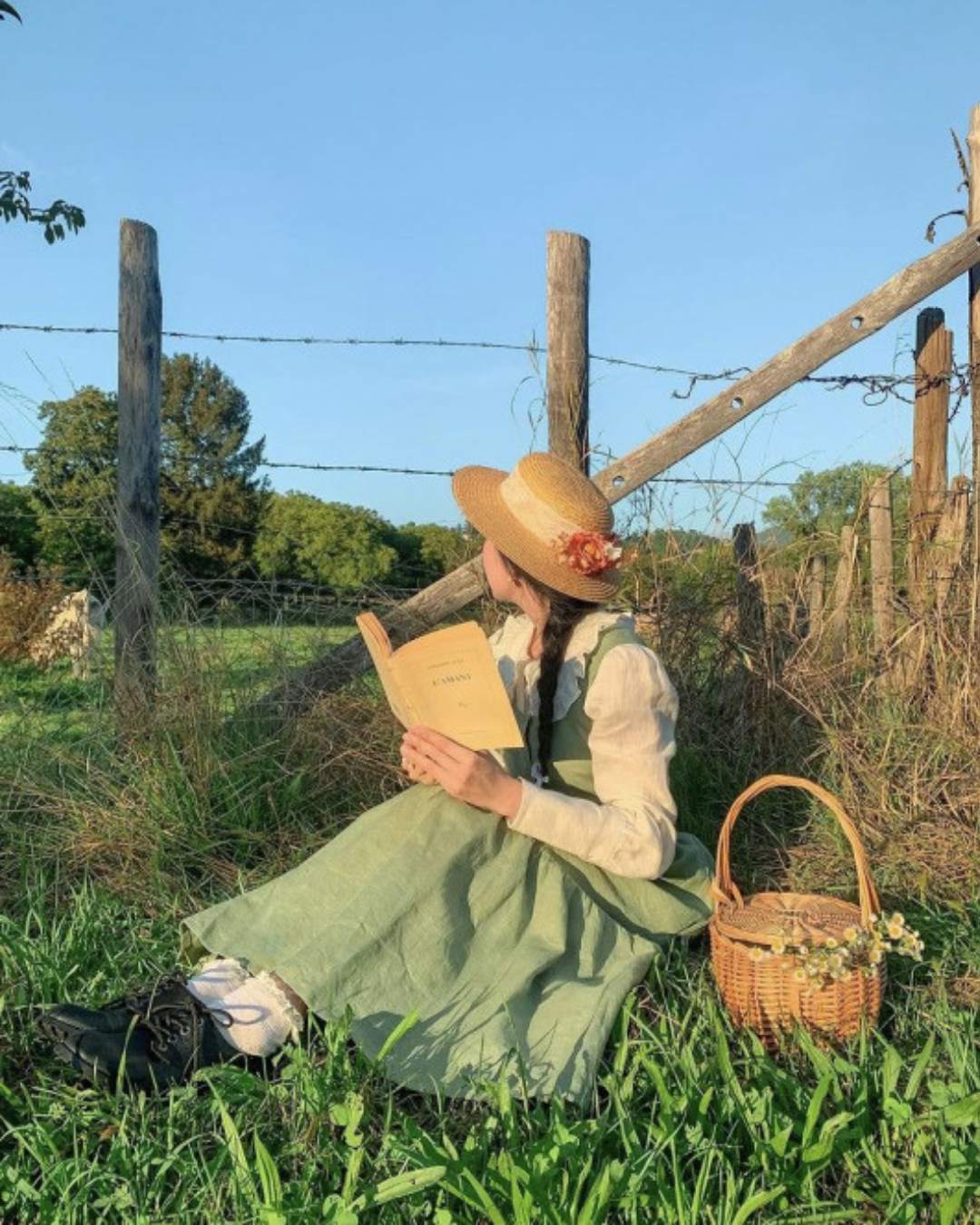
If Tumblr lit the spark, the global lockdowns of 2020 poured gasoline on the fire. Suddenly, the fantasy became a necessity. The hustle ground to a screeching halt. The external markers of success—travel, parties, office visibility—vanished overnight. The entire world was sent to their rooms.
In this vacuum, Cottagecore aesthetic exploded. With access to the outside world restricted, the domestic sphere became the entire universe. Everyone, it seemed, wanted a garden, a diary, and a life where the biggest problem was keeping a sourdough starter alive.
The aesthetic provided a roadmap for survival during a time of intense fear and uncertainty. If we couldn't go out, we would go "in"—into the kitchen, into the garden, into the craft room. The activities associated with Cottagecore—baking, gardening, embroidery, reading—became widespread coping mechanisms. They offered a way to mark the passage of time when the days blurred together.
Fashion played a crucial role in this shift. With no office to go to, the structured blazer and the uncomfortable heel became obsolete. Yet, spending days in sweatpants felt demoralizing for many fashion enthusiasts. Cottagecore offered a middle ground: the "nap dress."
Moreover, the pandemic highlighted the fragility of global supply chains and the environmental cost of fast fashion. The Cottagecore ethos of self-sufficiency resonated deeply. Growing your own basil, mending a hole in a sweater, or buying second-hand clothes felt like responsible, empowering choices. The movement aligned perfectly with a growing interest in sustainability and intentional living. It wasn't just about looking the part; it was about adopting a mindset of resilience and care.
Fashion Staples: The Uniform of Vanilla and Peace
Visually, Cottagecore is distinct and instantly recognizable. It is the sartorial equivalent of a warm hug. The clothes look like they smell like vanilla and peace. They prioritize comfort, femininity, and a connection to the natural world. For the modern fashion enthusiast, building a Cottagecore wardrobe involves investing in key staples that defy the trend cycle and embrace timeless romance.
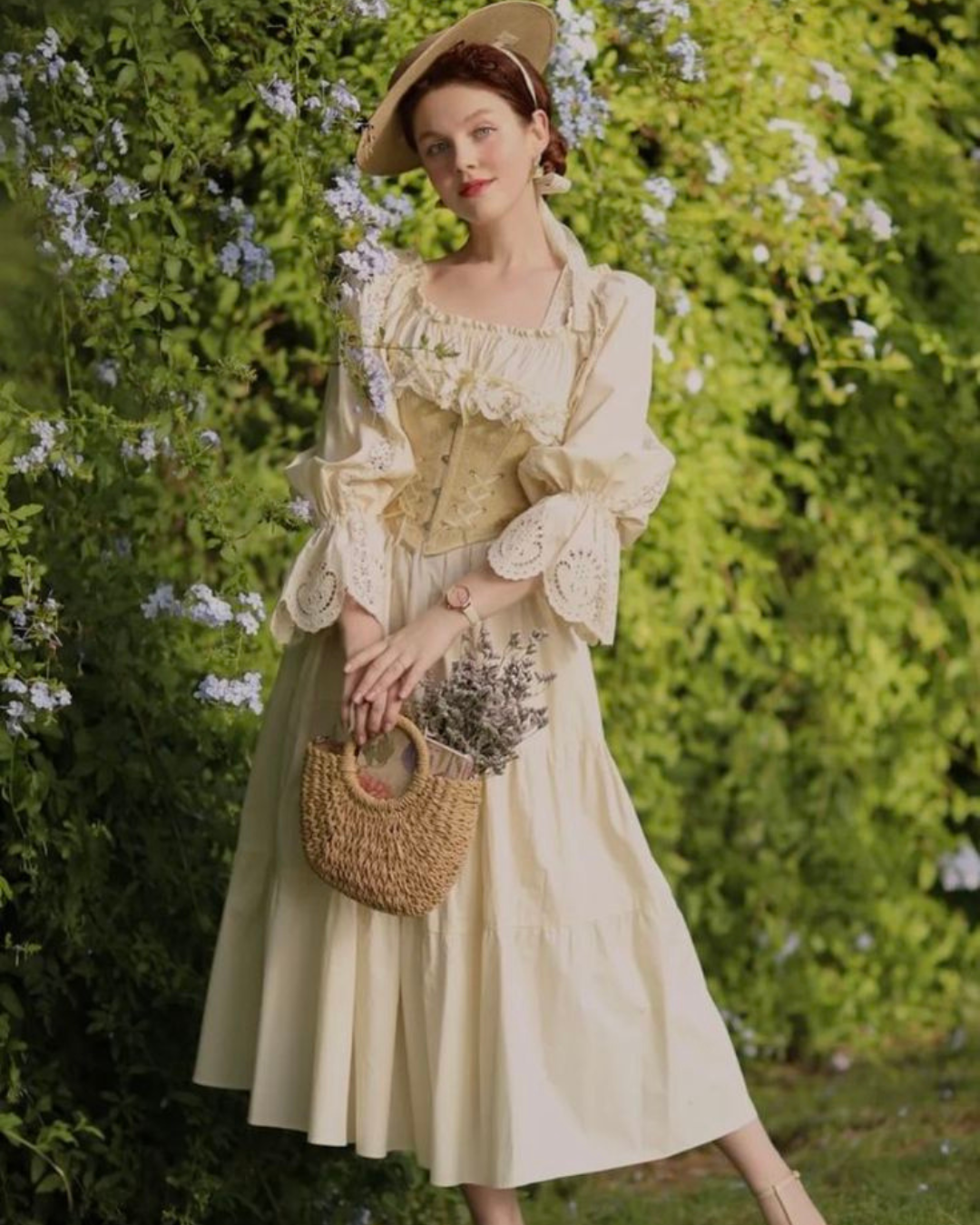
The Puffy Sleeve
Perhaps no single element defines the aesthetic as clearly as the puffed sleeve. Whether on a blouse, a cropped cardigan, or a maxi dress, the exaggerated sleeve silhouette is non-negotiable. It references historical fashion, evoking the romance of a Jane Austen novel or a fairy tale illustration.
Texture and Tactility: Lace and Knits
Because Cottagecore is so rooted in sensory experience, texture is paramount. The aesthetic champions natural fibers that feel good against the skin. We see an abundance of cotton, linen, and wool. Lace trims add a layer of delicate intricacy, often appearing on collars or hems. This detail speaks to a time when clothes were finished by hand, reflecting the value of craftsmanship.
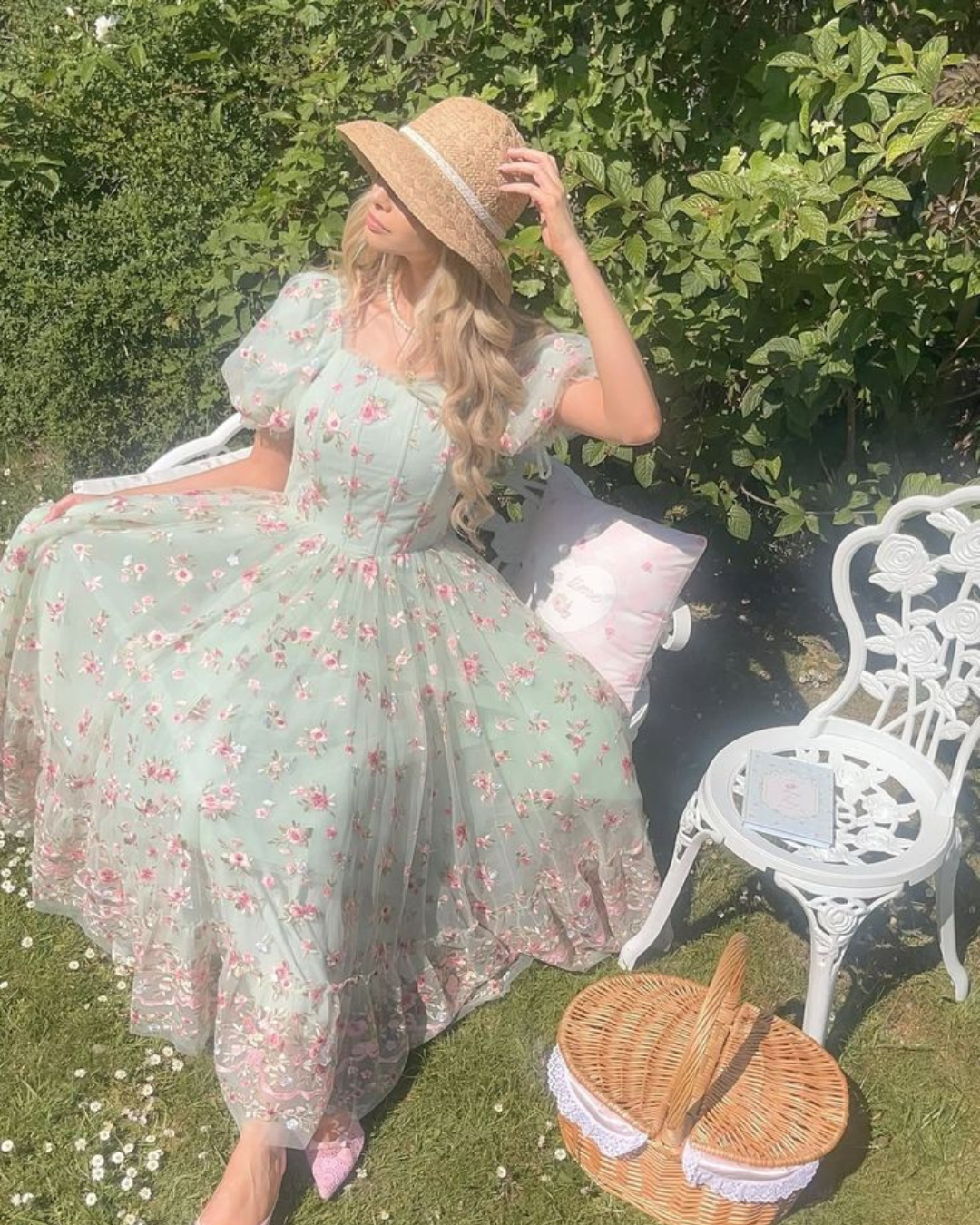
The Primacy of Florals
Prints are essential to the Cottagecore visual language, and florals are the undisputed queen. However, these are not the bold, abstract, or tropical florals of resort wear. These are "ditsy" florals—small-scale, intricate patterns that mimic a wild meadow.
The Flowing Silhouette
Restrictive clothing has no place here. The Cottagecore silhouette is fluid and forgiving. Tiered maxi skirts, empire waists, and smocked bodices allow for movement and breath. This is fashion that lets you eat the bread you baked. It is inclusive of changing bodies, rejecting the rigid sizing standards of high fashion in favor of garments that adapt to the wearer.
The Philosophy: Intentional Living in a Digital Age
While the puff sleeves and floral prints are the entry point, the staying power of Cottagecore lies in its deeper philosophy. If your soul craves peace, you are already cottagecore coded, regardless of what is in your closet.
The movement is fundamentally about intentional living. In a culture of distraction, Cottagecore advocates for mindfulness. It encourages us to pay attention to the small details of our lives. It elevates the mundane—making a cup of tea, writing a letter, arranging flowers—into a ritual worthy of celebration.
This mindset offers a powerful antidote to the anxiety of modern life. When you focus on a tangible task, like knitting a scarf or weeding a garden, you enter a state of flow. Your brain gets a break from the multi-tasking and notification-checking that defines the digital workday. It is a form of active meditation.
This philosophy extends to how we consume. The Cottagecore enthusiast values objects that last. They prefer a ceramic mug made by an artisan over a disposable cup. They mend their socks rather than throwing them away. This shift from consumption to care is a radical act in a capitalist society. It restores a sense of sacredness to our material world.
Conclusion: The Enduring Appeal of the Soft Escape
Critics might dismiss Cottagecore as mere escapism, a naive retreat from the complexities of the real world. And perhaps it is. But in a world that feels increasingly hostile, is escapism such a bad thing?
We cannot all move to a cottage in the woods. Most of us will continue to live in cities, work jobs that require screens, and navigate the stresses of modern society. But we can bring the spirit of the cottage with us.
Cottagecore remains relevant because the need for softness has not diminished. As long as the world feels loud, we will continue to crave the quiet. We will continue to seek out the pockets of peace, the textures that comfort us, and the aesthetic that reminds us that, beneath the noise, a simpler, slower life is possible.
So, if you find yourself longing to live with a cat in the woods, know that you are not alone. You are part of a movement that is rewriting the rules of success, one floral dress at a time.


.png)