

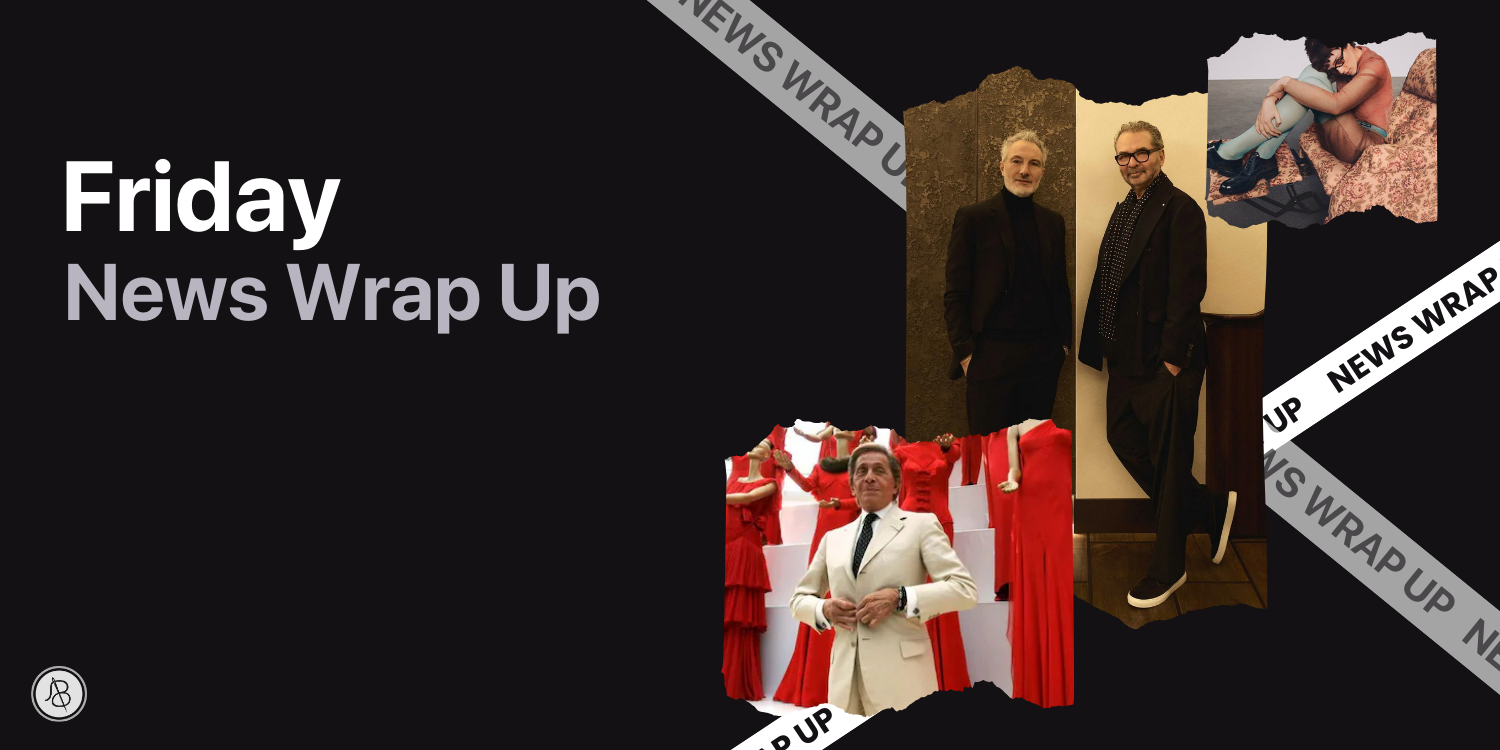
The world of fashion doesn't just move; it pirouettes, pivots, and occasionally, it stops to take a collective breath. This week was one of those moments. We witnessed the end of an era with the passing of a true titan, saw seismic shifts in corporate leadership at powerhouse groups, and watched as new campaigns and collections dared to redefine the narratives of iconic brands. It was a week of farewells, new beginnings, and deliciously dark fantasy.
From the enduring legacy of a signature red to bags that read like gothic novels, the industry gave us a lot to process. It showed us that fashion is a constant interplay between history and the future, between quiet elegance and unapologetic drama. So, before you clock out for the weekend, let's unpack the biggest stories that shaped the style conversation. Here is everything you need to know, without the noise.
1. Valentino Garavani's Enduring Legacy: More Than Just a Color
Valentino Garavani, the legendary Italian designer behind “Valentino Red,” passed away at 93, closing a defining chapter of couture history. His impact on fashion is immortal, most iconically through the vivid red that became the brand’s lifeblood—a hue born from a moment of inspiration at an opera in Barcelona. Valentino ensured every collection featured at least one red dress, calling it “the perfect image of a heroine.” Through this single, audacious color, he rewrote the narrative of feminine power and elegance.
Beyond the red, Valentino’s vision championed graceful, exquisitely detailed couture. He prioritized romance and craftsmanship at a time when others chased radical trends, crafting gowns defined by architectural lines and liquid movement that celebrated—never objectified—the women who wore them. His dresses became symbols of timeless elegance, worn by icons from Jackie Kennedy to Princess Diana and embraced as emblems of strength and allure.
Valentino’s passing stirred the global fashion community, with tributes to the “Last Emperor” echoing his belief in slow, intentional, and enduring style. He never chased fleeting trends or digital virality; his legacy remains rooted in the enduring language of red—a color forever synonymous with his name and the powerful femininity it represents.
2. Moncler's Next Summit: A New CEO for a New Era of Growth
Moncler, the brand that revolutionized luxury outerwear and made the puffer jacket fashion, announced a pivotal leadership change this week. Bartolomeo Rongone, fresh from helming Bottega Veneta, steps in as Group CEO on April 1, while founder Remo Ruffini transitions into executive chairman, retaining creative control. The move signals Moncler’s intent to blend tradition and innovation as it gears up for ambitious global expansion.
Rongone comes with a reputation for reinvigorating luxury brands and scaling them without diluting core identity. At both Bottega Veneta and Saint Laurent, his operational acumen was matched by an instinct for cultivating contemporary relevance. Now partnered with Ruffini, he’s expected to leverage these strengths, balancing creative vision with the rigorous demands of a global, digitally savvy consumer base.
This leadership evolution positions Moncler to navigate the future of luxury with confidence. The mix of Ruffini’s brand-defining creativity and Rongone’s strategic insight is poised to keep Moncler at the summit of performance and style, as industry insiders watch for the next phase of the brand’s ascent.
3. Tick-Tock: Turmoil in the LVMH Watch Division
The once-stable world of luxury watches at LVMH is in flux. This week, Antoine Pin's resignation as CEO of TAG Heuer drew attention to a string of executive shakeups within the group’s horological division. His departure, after several years of leadership, comes as the luxury watch market faces a cooling phase post-pandemic and as LVMH readies for Watch Week in Milan.
Pin’s exit highlights deeper questions about strategy and direction. The division, now under the stewardship of Frédéric Arnault, must juggle the distinct identities and challenges of TAG Heuer, Hublot, and Zenith. Each brand faces a different competitive landscape—heritage, edgy design, and technical mastery—complicated by rapidly evolving technology and shifting consumer tastes.
With leadership stability now in the spotlight, the next appointment at TAG Heuer will be closely watched by industry insiders. The outcome will shape whether LVMH’s watch division can clarify its narrative, innovate, and compete head-to-head against titans like Rolex and Swatch in a transforming market.
4. Miu Miu's Intellectual Playground: A Study in Contrasts
Miu Miu’s Spring/Summer 2026 campaign is all about contrasts—rugged leather and canvas paired with delicate silks, crystals, and architectural silhouettes, set against a commanding city skyline. The collection thrives on the tension between industrial toughness and romantic softness, with uniform staples dramatically reimagined through unexpected cutouts, ruffles, and exaggerated forms.
At the campaign’s heart is Olivia Rodrigo, the Gen Z pop star known for her raw, rebellious approach. Rodrigo perfectly embodies Miu Miu’s spirited duality—fearless and inventive, yet grounded in femininity—helping to bridge Miuccia Prada’s vision with a generation hungry for creative self-expression. The visuals channel both nostalgia and edge, positioning the collection for cultural resonance.
Through intelligent design and playful storytelling, the campaign turns runway staples into declarations of individuality. Miu Miu’s message is clear: fashion’s smartest statements come from embracing contradiction, complexity, and unapologetic personal flair.
5. Dior's Gothic Romance: When a Bag Becomes a Book
For the finale of this week’s news, Dior steps boldly into narrative-driven accessories with the new Book Cover Collection under creative director Jonathan Anderson. This Summer 2026 debut transforms two of the house’s most iconic bags—the Book Tote and Saddle Bag—into striking first-edition book covers, channeling the drama and allure of classic literature.
Anderson’s direction embraces the shadows, drawing on gothic inspirations like Bram Stoker’s Dracula for a collection that’s darkly intellectual and elegantly subversive. Stepping away from signature softness, these bags are pure conversation starters—each design a tribute to the mystique of narrative and the dualities at the heart of luxury.
With this collection, Dior leans into the rising appetite for “dark academia” and literary chic among new generations, marking a playful yet cerebral new chapter in the brand’s storied accessory line.
The Wrap: Why This Week Mattered
This week’s headlines showcase a fashion world in elegant flux. The passing of Valentino Garavani closed a golden chapter of Italian couture, yet his signature red ensures his vision endures across decades and dress codes. Meanwhile, Moncler’s leadership pivot and LVMH’s watch division challenges reveal how even legacy brands must balance heritage with bold moves and digital innovation to thrive in the global market.
On the creative front, Miu Miu's and Dior’s campaigns refuse to play it safe. They mine culture, literature, and duality to spark fresh conversations around identity, self-expression, and the evolving definition of luxury. Bags and collections are no longer just commodities—they’re stories, crafted to connect with how we think, dream, and share.
If this week proved anything, it’s that fashion feeds on reinvention and reflection in equal measure. Whether through a singular color, a gothic tote, or the next generation of industry leaders, the conversation between legacy and the future remains as vital as ever. As we step into the weekend, one thing is certain: style’s narrative is never finished—it’s only just turning the page.
For the finale of this week’s news, Dior steps boldly into narrative-driven accessories with the new Book Cover Collection under creative director Jonathan Anderson. This Summer 2026 debut transforms two of the house’s most iconic bags—the Book Tote and Saddle Bag—into striking first-edition book covers, channeling the drama and allure of classic literature.
Anderson’s direction embraces the shadows, drawing on gothic inspirations like Bram Stoker’s Dracula for a collection that’s darkly intellectual and elegantly subversive. Far from Dior’s traditional softness, these bags are designed with macabre illustrations and saturated color, turning each piece into portable art and signalling a shift towards thoughtful storytelling in luxury accessories.
With a nod to the rising “dark academia” aesthetic, Anderson infuses the collection with literary power and artistic experimentation. The Book Cover Collection is more than a trend—it’s a bold statement of intent, reimagining luxury as a conversation starter and ushering Dior into a thrilling new era defined by curiosity, creativity, and just the right amount of darkness.