Layering as Styling: The 2026 Approach to Getting Dressed
Published · Updated
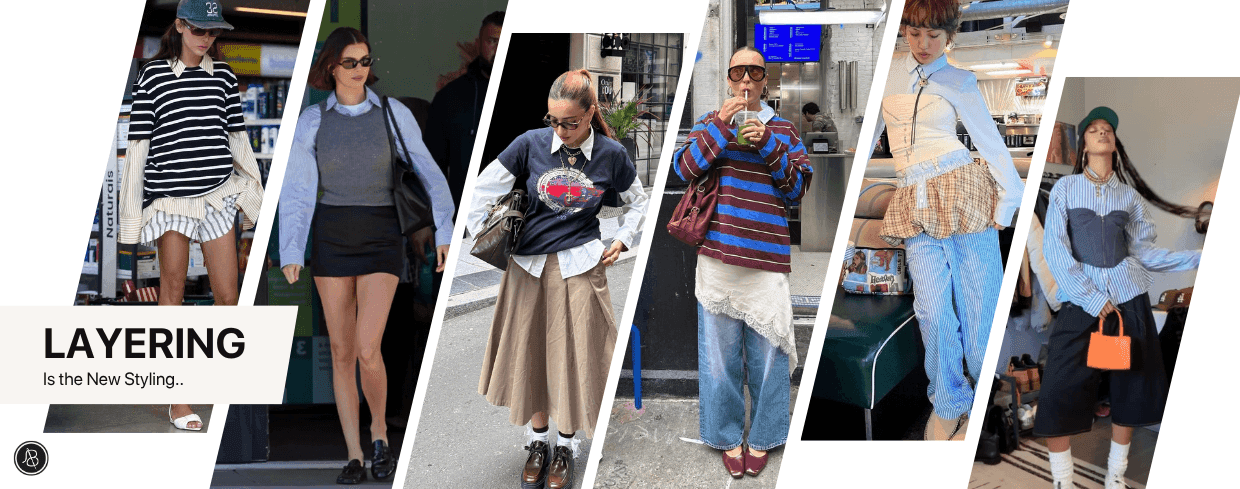
The year 2026 has marked a quiet but profound shift in the psychology of getting dressed. For the better part of the last decade, fashion was dominated by the "outfit formula" a prescriptive, algorithm-friendly way of dressing that relied on specific item combinations to signal relevance. You bought the trending dress, you wore the trending shoes, and the look was complete. It was efficient, certainly, but it was also static.
Fashion has moved away from the idea of the "hero piece" that one standout item that carries the entire look—and toward a more holistic, architectural approach to style. Dressing is no longer about finding a garment; it is about building a silhouette. It is about how multiple elements interact, collide, and harmonize with one another. In this new era, layering has evolved from a functional necessity into a sophisticated styling language. It is the primary tool we use to transform the mundane into the editorial, the basic into the bespoke.
This shift is not accidental. It is a reaction to the hyper-speed of trend cycles and a growing desire for individuality in a digital landscape saturated with sameness. Layering allows for a complexity that cannot be easily replicated by simply clicking "add to cart." It requires an eye for proportion, a sense of texture, and a willingness to experiment. It turns the act of getting dressed into a creative exercise, where the wardrobe you already own becomes the raw material for something entirely new.
To understand why layering has become the dominant styling mode of 2026, we have to look at what came before. In the early 2020s, "core" culture reigned supreme. Cottagecore, Gorpcore, Barbiecore these were costumes, essentially. They were pre-packaged aesthetics that you could buy into. But as we moved into the mid-2020s, a fatigue set in. The performance of specific aesthetics felt exhausting. People stopped wanting to look like a character and started wanting to look like themselves.
Construction is the antidote to the "core." It is an intellectual approach to fashion that prioritizes the how over the what. It isn't about owning the Prada skirt; it's about how that skirt is layered over trousers, under an elongated tunic, or paired with a deconstructed knit. The focus has shifted from consumption to utilization.
This move toward construction also reflects a maturing of the Gen Z and Millennial consumer. As these generations grow older, their relationship with fashion is deepening. They are less interested in the dopamine hit of the new and more interested in the satisfaction of the well-styled. They are looking for depth, both literally and figuratively. Layering provides that depth. It adds a third dimension to the outfit, creating visual interest that draws the eye in and holds it there.
Layering as a Visual Language
Layering in 2026 is distinct because it has detached itself from utility. Historically, we layered to stay warm. We wore undershirts and sweaters and coats because the weather demanded it. Today, layering is driven by aesthetics, proportion, and contrast. A tank top worn over a t-shirt serves no thermal purpose. A skirt worn over jeans is not about insulation. These are purely stylistic choices designed to break the predictability of basics.
When you wear a single layer a t-shirt and jeans, for example the eye scans the image and understands it instantly. It is a flat image. There is nothing to decode. But when you add a layer perhaps a sheer long-sleeve top under the t-shirt, or a cropped vest over it—you introduce tension. You create a visual puzzle that the brain finds satisfying to solve.
This language relies heavily on the interplay of opacity and transparency. The "Sheer Edit" trend we have seen dominate recent seasons is a crucial component of this. Sheer fabrics mesh, organza, tulle act as windows. They allow us to layer without adding bulk, which was always the enemy of traditional layering. Now, we can stack three or four garments on top of one another while maintaining a sleek silhouette. We can reveal the structure of the undergarments while softening the lines of the outer garments. It creates a ghosting effect, a visual echo that makes the outfit feel dynamic and alive.
The Mechanics: Proportion and Contrast
If layering is the language, then proportion and contrast are the grammar rules. The success of a constructed outfit in 2026 relies on the manipulation of these two elements.
Gone are the days of matching silhouettes tight on tight, or loose on loose. The modern eye craves conflict. We are seeing cropped layers paired with extreme longline silhouettes. We see micro-minis worn over floor-length trousers. We see oversized, boxy blazers thrown over delicate, second-skin base layers.
This play on proportions creates a sense of architecture. It changes the perceived shape of the body, not to hide it, but to reimagine it.
For instance, consider the "long-over-short-over-long" technique that has become ubiquitous in street style. A long tunic shirt is worn over trousers, but a cropped knit vest is layered on top of the tunic. This breaks the body into thirds, rather than the traditional halves, creating a more complex visual rhythm. It draws the eye up and down, elongating the frame while adding waist definition through the cropped layer.
Contrast is equally vital. The most compelling layered looks in 2026 mix textures that technically shouldn't work together. We are seeing the organic paired with the synthetic, the hard with the soft. A heavy, cable-knit wool sweater might be layered over a liquid silk slip dress. A stiff, structured denim corset might be worn over a soft, sheer blouse.
This friction is what makes the outfit feel modern. If everything matches too perfectly if the textures are all the same weight and finish the layering gets lost. It becomes a blob. But when you place leather against lace, or nylon against cashmere, you create a boundary line where the eye can rest. You define the edges of the construction.
Color plays a role here, too, but often in a more subdued way. Because the structural elements of the outfit are so complex, the color palettes in 2026 tend to be more tonal or monochromatic. We see a lot of "shades of grey" or "variations of cream." This allows the layering to take center stage. When you wear five different shades of beige, the focus becomes the difference in texture and length, rather than the color itself. It is a sophisticated way of handling volume.
Redefining Basics: The New Roles of Shirts and Tanks
As our approach to styling has evolved, so too have the roles of the individual garments in our closets. The hierarchy of the wardrobe has been upended. Pieces that were once the stars of the show have been demoted to supporting roles, and humble basics have been elevated to architectural essentials.
The button-down shirt is the primary victim and beneficiary of this shift. For decades, the shirt was a top layer. You put it on, buttoned it up, and that was your outfit. In 2026, the shirt is a base. It is scaffolding. It is almost always worn open, or partially buttoned, acting as a frame for what is underneath, or a canvas for what goes on top. It is rarely the final piece of the puzzle. We see collars poking out from sweaters, cuffs extending beyond blazer sleeves, tails hanging below hemlines. The shirt is now a device used to add white space to an outfit, to break up heaviness, or to add a crisp edge to softer layers.
The humble tank top has undergone a similar transformation. No longer just an undergarment or gym wear, the tank has become a critical layering accessory. But interestingly, its position has moved. We are seeing tanks worn over other garments. A ribbed white tank worn over a fitted, long-sleeve mesh top is a standard styling move in 2026. It reverses the expected order of dressing (underwear over outerwear), which immediately signals a fashion-forward mindset. It turns the tank into a vest, a corset, a structural piece that holds the outfit together.
Perhaps the most significant impact of the layering revolution is its effect on sustainability. For the Gen Z and Millennial audience, who are deeply conscious of their environmental footprint, this shift toward construction is a welcome change.
In the era of outfit formulas, if you didn't have the specific item the trend demanded, you had to buy it. If the trend was "prairie dresses," and you didn't own one, you consumed. But in the era of construction, the trend is a technique, not a product. You can participate in the zeitgeist without purchasing a single new item.
Layering is the ultimate tool for wardrobe longevity. It allows the same pieces to be worn in entirely new ways, across different seasons and settings. That slip dress you bought for a summer wedding? In the past, it would sit dormant for six months of the year. Now, layered over a turtleneck and trousers, it becomes winter office wear. That oversized graphic tee? Layered under a blazer and over a collared shirt, it becomes appropriate for a creative meeting.
This aligns perfectly with the "shop your closet" ethos that is gaining momentum in 2026. People are finding joy in rediscovery. They are pulling out items they haven't worn in years and finding that, when layered correctly, they feel fresh again. It turns the wardrobe into a library of resources rather than a graveyard of past trends.
Furthermore, layering naturally encourages the purchase of higher quality items. When you are building an outfit based on construction, you pay more attention to the fabric. You notice how it drapes, how it feels against other fabrics. You become less tolerant of cheap, synthetic blends that cling or pill, because they ruin the clean lines of your layers. You start to invest in pieces that have structural integrity good cotton, heavy wool, real silk because they hold their own in a complex outfit.
This shift slows down the trend cycle. When styling is the focus, the clothes themselves become less disposable. We are not chasing the "new" outfit; we are constructing a "better" one using what we have. It is a more sustainable, thoughtful, and ultimately more satisfying way to engage with fashion.
Navigating this new world of construction can be intimidating. Moving from "shirt + pants" to "dress over trousers + vest + blazer" requires a visual vocabulary that not everyone possesses intuitively. The line between "chicly layered" and "bulky mess" is thin. It involves understanding color theory, fabric weight, and silhouette balance.
This is where BeSpoke AI Stylist becomes an indispensable tool for the 2026 consumer.
We understand that you aren't looking for a shopping bot to tell you what to buy. You are looking for a creative director to help you edit what you own. BeSpoke AI Stylist is designed to support the architecture of dressing.
Our algorithms analyze the items currently in your digital wardrobe not just as individual SKUs, but as building blocks. We don't just see a "white shirt." We see a "base layer," a "textural contrast," a "length extender." We understand the physics of your clothes.
When you are stuck in a style rut, BeSpoke AI Stylist doesn't suggest a new purchase. It suggests a new configuration. We might suggest layering that summer slip dress over a crisp button-down for a workday look you hadn't considered. We might show you how to sandwich a sheer top between a blazer and a bustier to add depth to a night-out ensemble.
We help you master the proportions. We give you the confidence to try the "wrong" combinations that end up looking so "right." We act as the second set of eyes in the mirror, ensuring that your construction stands up.
In a world where layering is the new styling, BeSpoke AI Stylist is your blueprint. We help you build outfits that are complex, sustainable, and uniquely yours.
As we look toward the remainder of the decade, it is clear that the era of passive dressing is over. We are no longer content to be mannequins for brands, displaying their total looks exactly as they were styled in the lookbook. We have become the stylists.
Layering is the manifestation of this agency. It is a declaration that we are willing to do the work to create something beautiful. It transforms the morning ritual of getting dressed from a chore into a craft.
In 2026, we are not defined by the labels inside our clothes, but by how we put them together. We are mixing the high and the low, the old and the new, the sheer and the opaque. We are building silhouettes that defy the seasons and ignore the rules.
This is a more sustainable future, yes. It is a more creative future, certainly. But mostly, it is a more personal future. Because when you construct an outfit layer by layer, piece by piece, you are inevitably constructing a reflection of yourself complex, multifaceted, and deeply, intentionally styled.
The formula is dead. Long live the construction.
What's the difference between layering for warmth and layering for style?
Layering for warmth is about fabric weight and coverage. Layering for style is about proportion and how pieces interact visually, and the best layered outfits do both at once.
How many layers is too many?
Three is usually the sweet spot. More than that tends to add bulk without adding to the look.
Ready to put this into practice? Build your digital wardrobe with BeSpoke AI Stylist and get outfit ideas made from what you already own. Download on the App Store or Play Store.
Ready to upgrade your style game? Download BeSpoke AI Stylist and let your AI stylist take it from here.

Author
Neeraj Bansal