

Most people don’t struggle with fashion because they lack clothes. If you opened your closet right now, you would probably find hangers pressed tightly together, drawers tha barely close, and piles of "maybe" items stacked on a chair. We are living in an era of accumulation. We buy for the fantasy life we wish we had—the galas, the vacations, the specific version of ourselves that exists only on Instagram—while neglecting the actual life we live every Tuesday at 9 AM.
The struggle isn't scarcity; it's chaos. It’s the paradox of choice. When you have too many options that don't speak the same language, getting dressed becomes a daily negotiation. You stand there, coffee in hand, running late, cycling through five different outfits only to end up wearing the same jeans and t-shirt you wore three days ago. It feels defeating. It feels like a failure of imagination.
But what if the solution wasn’t more shopping? What if the answer wasn't a bigger walk-in closet or a new haul from the latest sale? What if the secret to effortless style was actually… less?
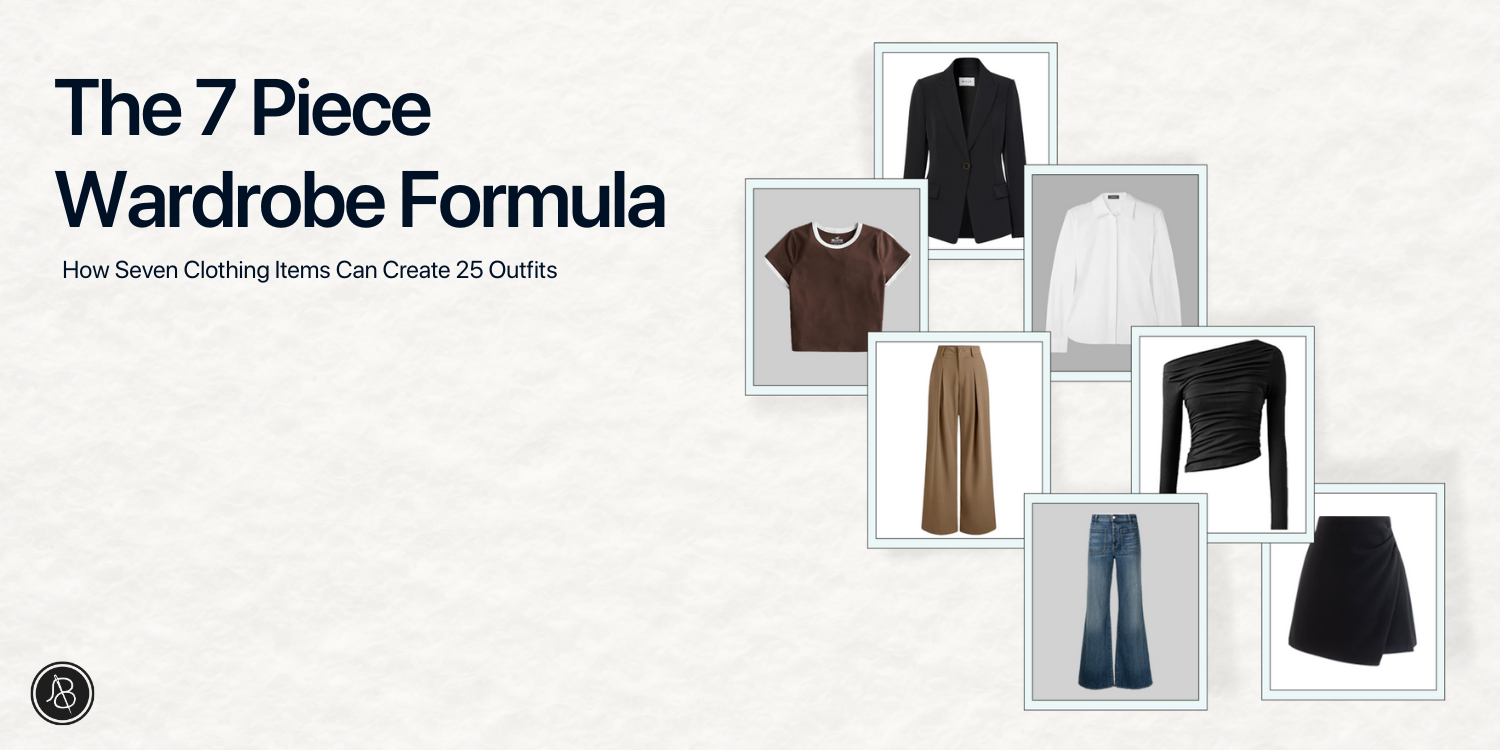
This is the premise of the 7 Piece Wardrobe Formula. It is a radical simplification of how we approach dressing. It posits that with just seven versatile, intentional clothing items, you can create up to 25 different outfit combinations that work across days, moods, and occasions. This isn't about deprivation. It’s about curation. It’s about building a system where every piece works harder than you do.
The Philosophy of Less But Better
Before we dive into the specific items, we need to understand the philosophy behind this approach. The modern fashion industry is built on the concept of obsolescence. Trends are designed to expire. The "it" item of September is the embarrassing mistake of November. This cycle keeps us in a state of constant consumption, chasing a feeling of completeness that never arrives.
The 7 Piece Formula flips this script. It focuses on balance, layering, and repeatable silhouettes rather than trend-driven dopamine hits. It values architecture over decoration. When you strip away the noise—the neon prints you wore once, the itchy fabrics, the cuts that require specific undergarments—you are left with the bones of a great wardrobe.
This approach aligns perfectly with a more sustainable, mindful way of living. It is eco-chic in the truest sense. By wearing what you own more often, you reduce your carbon footprint. By investing in better quality pieces because you are buying fewer of them, you step out of the fast-fashion churn. It is a style choice that feels good ethically and looks good aesthetically.
The 7 Essential Pieces
The magic of this formula lies in the selection. You cannot just pick any seven random items. A neon parka, a bikini top, and a ballgown skirt will not give you 25 outfits. The pieces must be neutral, adaptable, and easy to layer. They need to play well together. They are the diplomatic corps of your closet—always ready to negotiate a peace treaty between comfort and style.
Here are the seven core players:
1. The Oversized Blazer
This is your power player. It is the architectural anchor of the capsule. An oversized blazer—think a boxy, masculine cut in a neutral tone like charcoal, black, beige, or navy—transforms everything it touches. Thrown over a t-shirt, it says "creative director." Draped over a dress, it says "effortless cool." It provides structure to soft outfits and polish to casual ones. It is the jacket that doesn't try too hard but always commands respect.
2. The Crisp White Shirt
We aren't talking about a stiff, corporate uniform shirt. We mean a slightly relaxed, high-quality cotton or poplin button-down. This item is a shapeshifter. Button it all the way up for a sleek, minimalist look. Unbutton it low and roll the sleeves for something sensual. Wear it open like a jacket. Tie it at the waist. Tuck it in, leave it out, half-tuck it. The white shirt is the ultimate blank canvas. It reflects light onto your face and makes every outfit look fresh and intentional.
3. The Black Fitted Top
This is the foundational layer. It could be a bodysuit, a ribbed turtleneck, or a high-quality tank top, depending on your climate. The key is the silhouette: sleek, close to the body, and uncomplicated. It acts as the "quiet" part of the outfit, allowing trousers or skirts to shine. It is the piece you don't notice until you realize how perfectly it holds the entire look together. It creates a clean line and works beautifully under layers without adding bulk.
4. The Baby Tee
The baby tee brings the youth and the "funky" element. It’s a nod to 90s minimalism—slightly cropped, slightly shrunken, and undeniably cool. It keeps the capsule from feeling too serious or corporate. Whether it’s plain white, grey, or has a subtle graphic, the baby tee creates friction when paired with more tailored pieces. A blazer with a baby tee is modern; a blazer with a blouse can sometimes feel dated. It adds a touch of playfulness and ease that is essential for modern style.
5. Straight Leg Trousers
Goodbye, skinny jeans. Farewell, uncomfortable waistbands. The straight-leg trouser is the MVP of the bottom half. Look for a pair that sits comfortably at the waist and falls in a clean line to the floor or ankle. These can be dressed up for a meeting or dressed down with sneakers for a coffee run. They offer the comfort of pajamas but the visual impact of high fashion. Neutral tones like black, grey, olive, or camel work best here to maximize versatility.
6. Blue Jeans
Denim is non-negotiable. It grounds the wardrobe in reality. But not just any jeans—we want a classic, straight or relaxed fit in a medium to vintage blue wash. No massive rips, no rhinestone embellishments. Just solid, reliable denim. These are your weekend warriors, your casual Friday heroes, your "I want to look good but I don't want to try" pants. They add texture and grit to the cleaner pieces like the white shirt and blazer.
7. The Well-Fitting Midi Skirt
The final piece adds movement and femininity. A midi skirt—perhaps a silk slip skirt or a structured A-line—bridges the gap between casual and formal. It’s arguably more versatile than a dress because it can be completely transformed by the top you choose. With a baby tee and sneakers, it’s brunch-ready. With the black fitted top and heels, it’s a dinner date. It introduces a different silhouette to break up the monotony of pants.
The Mathematics of Style: How 7 Becomes 25
Now, let's do the math. How do seven items become 25 outfits? The secret is in the permutations. We stop seeing clothes as static "outfits" (this top goes with these pants) and start seeing them as modular components. Every top works with every bottom. Every layer works over every base.
The Base Combinations (12 Outfits):
Let's look at the simple pairings. You have three tops (White Shirt, Black Top, Baby Tee) and three bottoms (Trousers, Jeans, Skirt).
White Shirt + Trousers
White Shirt + Jeans
White Shirt + Skirt
Black Top + Trousers
Black Top + Jeans
Black Top + Skirt
Baby Tee + Trousers
Baby Tee + Jeans
Baby Tee + Skirt
Bonus: White Shirt worn open over Black Top + Bottoms (3 variations)
Already, we have 12 distinct looks. But we haven't even touched the blazer yet.
The Layered Looks (9 Outfits):
Add the oversized blazer to any of the base top/bottom combinations, and the vibe changes completely.
Blazer + White Shirt + Trousers (The Power Suit vibe)
Blazer + White Shirt + Jeans (The French Girl uniform)
Blazer + White Shirt + Skirt (The Editorial look)
Blazer + Black Top + Trousers (The sleek monochromatic look)
Blazer + Black Top + Jeans (The off-duty model)
Blazer + Black Top + Skirt (The date night)
Blazer + Baby Tee + Trousers (High-low mix)
Blazer + Baby Tee + Jeans (Weekend cool)
Blazer + Baby Tee + Skirt (Playful polish)
That brings us to 21. Where do the rest come from? Styling tricks.
The Styling Variations (4+ Outfits):
This is where personal style and creativity come into play.
The Tucked vs. Untucked: Wearing the white shirt loose over trousers is a completely different silhouette than tucking it in tightly.
The Texture Play: Layer the white shirt under the black fitted top (if it's a tank) for a 90s layered look, paired with jeans.
The Monolith: If your trousers and black top match, you create a faux-jumpsuit look. Add the blazer for a tuxedo effect.
The "Shirt as Jacket": Wear the baby tee with the skirt, and tie the white shirt around your waist. It adds a layer of interest and casual flair without being worn traditionally.
Suddenly, you aren't just wearing clothes; you are styling them. You are playing with proportion. You are adjusting the volume. The same seven items can look strict and professional on Monday, and relaxed and funky on Saturday, just by changing how you button, tuck, or layer them.
Why This Formula Actually Works
You might be thinking, "This sounds boring. Where is the color? Where is the excitement?" But boredom is usually a symptom of clutter, not simplicity. When you can actually see your clothes and trust that they work, you feel a sense of calm authority.
1. Elimination of Decision Fatigue
We make thousands of decisions a day. By the time we get to work, our brains are often already tired. This formula protects your mental energy. Instead of standing in front of a full wardrobe and feeling stuck, you work with a small set of pieces that already belong together. It’s a pre-vetted system. You can get dressed in the dark and know you look good.
2. The Rise of "Intention"
Outfits feel intentional because every item serves more than one purpose. There are no throwaway pieces here. When you wear the blazer with the baby tee, it looks like a choice, not an accident. This is the secret to how some people—think of the chic women you see on Pinterest or in street style photos—seem to always have great outfits without looking like they own a department store. They have mastered the art of the uniform.
3. Financial Clarity
When you stop buying 20 cheap, trendy items a year and focus on 7 great ones, your budget shifts. You can afford the better denim. You can invest in the blazer with the perfect wool blend and lining. You start valuing cost-per-wear over the initial price tag. This is how you build a luxury wardrobe on a real-world budget. You are buying assets, not liabilities.
4. Visibility and Maintenance
Managing seven items is easy. You know when they need to be dry cleaned. You know if a button is loose. You respect them more. In a massive, cluttered closet, clothes get crushed, stained, and forgotten. In a capsule, every piece is a VIP. This visibility means you are never surprised by a wardrobe malfunction five minutes before an Uber arrives.
The Bigger Impact: Clarity Over Chaos
Adopting the 7 Piece Wardrobe Formula does something to your brain. It retrains you to look for cohesion instead of novelty.
When you walk into a store or scroll through an app, you stop looking at individual shiny objects. You stop saying, "Oh, that's a cute top," and buying it without a plan. Instead, you ask, "Does this work with my core seven? Does this add value to the system, or does it just add noise?"
You become a curator.
This shift from quantity to clarity is profound. It frees you from the tyranny of the trend cycle. You realize that you don't need the micro-mini skirt that is popular for exactly three weeks on TikTok. You don't need the neon mesh top that looks good in a photo but feels terrible on your skin. You have a system. You have a look.
Styling for the Real World (Gen Z & Millennial Edition)
Let's ground this in reality. How does this actually look for a 26-year-old creative or a 32-year-old marketing manager?
The Coffee Shop Work Sesh:
You grab the blue jeans and the baby tee. It’s comfortable for sitting for three hours. But the AC is blasting, so you throw on the oversized blazer. You add chunky loafers or your favorite beat-up sneakers. You look professional enough to take a Zoom call, but cool enough to be seen in public.
The Gallery Opening / Date Night:
You take the midi skirt and pair it with the black fitted top. It’s sleek. It highlights your shape. You slick your hair back. If it’s chilly, you drape the blazer over your shoulders (the "shrobing" technique). It’s elegant but not stuffy. It feels modern.
The Sunday Reset:
It’s the white shirt, unbuttoned low, sleeves rolled up, tucked loosely into the straight-leg trousers. Maybe you’re going to the farmers market or just grabbing brunch. It’s easy. It feels like wearing pajamas, but you look like you own a wildly successful architectural firm.
Moving Forward: Your Wardrobe, Your Rules
The 7 Piece Formula is not a prison. It is a foundation. Once you have these seven pillars in place, you can add. You can bring in a pop of red accessories. You can add a statement coat. You can swap the blue jeans for black ones if that’s more your vibe.
The point is not to limit yourself to only seven items forever. The point is to prove to yourself that you need far less than you think to look far better than you imagined.
It is an invitation to stop stressing and start dressing. To stop letting your possessions own you, and start owning your look. When you strip away the excess, the decision fatigue, and the pressure to keep up, you make room for the most important part of personal style: you.
So, take a hard look at your closet. Find your seven. Build your system. And watch how much easier—and more stylish—life becomes when you focus on what truly matters.