
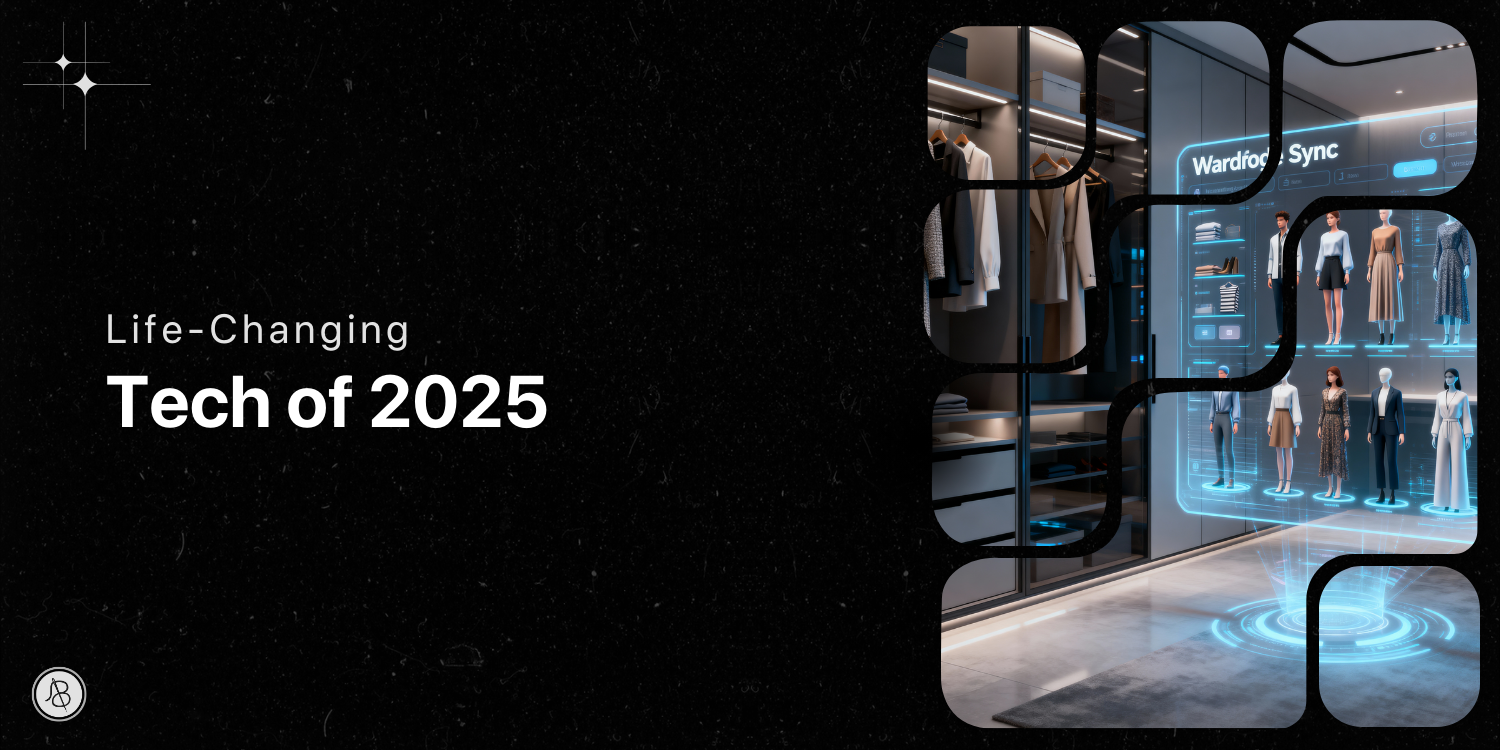
2025 was not about flashy launches or futuristic promises. It was the year technology quietly integrated into daily routines and changed how people shopped, dressed, and interacted with fashion without making noise about it. This shift was less about innovation for innovation’s sake and more about convenience, accuracy, and relevance. It was the year the "future" stopped feeling like a sci-fi movie and started feeling like a well-tailored Tuesday morning.
For decades, we were promised flying cars and holographic butlers. What we got instead was something far more practical: technology that actually works. 2025 was defined by a subtle, almost invisible layer of intelligence that wrapped itself around our lives. It didn't demand attention; it simply smoothed out the edges of our daily existence. The friction of decision-making, the uncertainty of online shopping, and the disconnect between what we saw on a screen and what arrived at our door—all of it began to dissolve.
This was the year the tech industry stopped trying to dazzle us with gimmicks and started focusing on utility. The result was a profound change in how we approach personal style and consumption. We moved from a model of endless searching to one of curated discovery. We stopped guessing and started knowing. In 2025, technology became the quietest, most reliable friend in the room.
AI Stylists Became a Daily Tool
Choosing outfits stopped being a trial and error process. AI stylists began offering outfit suggestions based on body type, lifestyle, weather, past choices, and upcoming occasions. What once felt experimental became reliable and surprisingly accurate. Styling moved from mirrors to screens and saved time while reducing indecision.
In previous years, "digital styling" was often a clunky experience—a glorified search bar that threw random products at you based on a loose interpretation of "boho chic." But in 2025, the algorithms grew up. They stopped looking at clothes as isolated items and started understanding them as part of a narrative—your narrative.
The morning routine underwent a quiet revolution. Instead of standing in front of a closet full of clothes and feeling like you had nothing to wear, you simply checked your phone. Your AI stylist knew it was raining, knew you had a client meeting at 10 AM, and knew you preferred comfort on Tuesdays. It suggested the navy wide-leg trousers (which it knew were clean because it tracks wear frequency), paired with the cream knit that creates a professional yet approachable silhouette. It even reminded you that those leather boots needed a quick wipe-down before heading out.
This level of integration changed the psychology of dressing. The mental load of "getting it right" was offloaded to an intelligent assistant. This didn't stifle creativity; it liberated it. By handling the logistical baseline of dressing—weather appropriateness, color coordination, occasion suitability—the AI allowed users to focus on the fun part: expression. You could override the suggestion, of course. You could ask for something "bolder" or "more relaxed," and the system would pivot instantly, learning from that deviation for next time.
For the modern fashion enthusiast, this was a game-changer. It meant your wardrobe was actually being utilized. We’ve all been guilty of wearing 20% of our clothes 80% of the time. AI stylists flipped that statistic. They surfaced forgotten pieces, suggested new combinations you hadn’t thought of, and gently nudged you to donate items that hadn’t been touched in a year. It was sustainable fashion in practice, not just theory. By maximizing what we already owned, we bought less but dressed better.
The technology also democratized the concept of a personal stylist. What was once a luxury service reserved for celebrities and the ultra-wealthy became accessible to anyone with a smartphone. It wasn't about status; it was about optimization. It was about reclaiming the fifteen minutes spent staring blankly at hangers every morning. In 2025, time became the ultimate luxury, and AI stylists gifted it back to us in spades.
Virtual Try-Ons Went Mainstream
Virtual try-ons became a standard shopping feature rather than a novelty. Shoppers could see how clothes fit, draped, and moved on real body representations before purchasing. This reduced returns, improved confidence while buying online, and made digital shopping feel more realistic and informed.
We all remember the early days of virtual try-on tech. You’d upload a photo, and a 2D image of a dress would be awkwardly pasted over your body like a paper doll. It was fun for five minutes, but useless for making a purchasing decision. 2025 changed that entirely. The technology evolved from simple image overlay to complex physics simulation.
Now, when you clicked "Try On," you weren't just seeing a picture. You were seeing a simulation of fabric weight, tension, and drape. You could see how the silk skirt would cling to your hips versus how the linen trousers would break at your shoe. You could turn, lift your arms, and sit down in the virtual space to see if the waistband would dig in or if the hemline would ride up. It was a digital dressing room that offered nearly the same fidelity as a physical one, minus the harsh lighting and the curtain that never quite closes.
This shift had massive implications for sustainability—a core value for the modern consumer. The era of "bracketing"—buying the same item in three sizes with the intention of returning two—began to fade. When you know how something fits before you buy it, you buy it once. Returns, which had been a logistical and environmental nightmare for the fashion industry, dropped significantly. The carbon footprint of shipping items back and forth was slashed, not by guilt-tripping consumers, but by empowering them with better tools.
For the Gen Z and Millennial shopper, this accuracy was non-negotiable. We value transparency and authenticity, and there is nothing less authentic than a product that looks nothing like its photo. Virtual try-ons bridged the trust gap. They allowed brands to be honest about fit. If a shirt was designed to be oversized, the virtual try-on showed that. If a fabric had zero stretch, the simulation reflected that rigidity.
It also made shopping more inclusive. "Standard sizing" has always been a myth; human bodies don't come in standardized molds. Virtual try-ons allowed users to input precise measurements or do a quick 3D body scan with their phone camera. The result was a visualization of how that specific garment looked on their specific body, not a model's body. It validated diverse shapes and sizes in a way that traditional e-commerce never could. It wasn't just about finding clothes that fit; it was about finding clothes that fit you.
AI-Powered Personalization Finally Worked
Personalization stopped feeling generic. Sizes, color palettes, recommendations, and feeds began reflecting individual preferences instead of mass trends. Algorithms improved by learning from behavior rather than assumptions, making shopping experiences feel tailored rather than random.
For years, "personalization" meant that if you bought a toaster, the internet would show you ads for toasters for the next three months. It was clumsy, annoying, and fundamentally misunderstood human needs. In 2025, the algorithms finally got the memo: context matters.
The new wave of AI didn't just track clicks; it understood intent and aesthetic evolution. It recognized that just because you bought a neon green crop top for a festival in July didn't mean you wanted a neon green winter coat in November. It learned to distinguish between "need-based" purchases (like socks or a raincoat) and "style-based" purchases.
This deep learning created a shopping feed that felt like a curated magazine edited specifically for you. If your style leaned towards "Scandinavian minimalism," you stopped seeing chaotic prints and logo-heavy streetwear. Instead, your feed was populated with structured coats, neutral tones, and high-quality knits. But crucially, the AI was smart enough to introduce calculated serendipity. It wouldn't just show you what you already liked; it would show you things adjacent to your taste—items that would push your style boundary just enough to be exciting without being alienating.
This was vital for the discovery process. We live in an era of infinite choice, which often leads to analysis paralysis. By filtering out the noise, AI-powered personalization restored the joy of browsing. It felt less like digging through a bargain bin and more like walking into a boutique where the owner knows your name and your taste.
Moreover, personalization extended beyond just product recommendations. It influenced the entire interface. If you were a visual shopper, your app interface prioritized large, editorial-style imagery. If you were detail-oriented, it highlighted material composition and sustainability credentials upfront. The technology adapted to your cognitive style.
It also respected the modern consumer's desire for privacy and agency. The best personalization in 2025 was transparent. Users could see why a recommendation was being made—"Because you viewed oversized blazers" or "Because you prefer sustainable fabrics." This transparency built trust. It shifted the dynamic from surveillance to service. We were no longer targets for advertisers; we were partners in a curated experience.
AI-Generated Product Imagery Changed Campaigns
Brands began using AI-generated visuals for product imagery and campaigns. Photoshoots no longer required physical sets, large crews, or long production timelines. Visuals became faster to produce, scalable, and adaptable across platforms while maintaining a high level of realism.
This was perhaps the most controversial yet impactful shift for the industry side of things, but for the consumer, it meant a richer visual world. In the past, a brand might shoot a campaign in one location with two models. If you didn't see yourself in those two models, it was hard to imagine the product in your life.
With AI generation, imagery became fluid. A single product could be visualized in dozens of contexts instantly. Selling a waterproof jacket? The AI could showcase it on a rainy street in Tokyo, a misty hike in the Pacific Northwest, or a windy commute in London. It allowed brands to tell more diverse stories without the massive carbon footprint associated with flying crews around the globe.
This scalability also meant better representation. Brands could generate imagery showing clothes on a vast spectrum of skin tones, ages, and body types without the logistical constraints of a traditional casting call. For the consumer, this meant seeing the product on someone who actually looked like them. It wasn't about replacing human models entirely—editorial and high-fashion photography still thrived on human artistry—but for e-commerce, it meant inclusivity at scale.
It also allowed for hyper-relevant marketing. If a brand knew you were browsing from a beach town, the imagery you saw could reflect a coastal aesthetic. If you were in a snowy city, the background shifted to an urban winter scene. This dynamic imagery made the shopping experience feel immediate and relevant. It bridged the gap between the product and the consumer's reality.
The quality of these visuals in 2025 was indistinguishable from reality. The "uncanny valley" effect that plagued early AI art was gone. Fabrics had texture; lighting had depth; skin had pores. It was hyper-realism with a purpose. It allowed for creativity that wasn't bound by physics or budget. A sneaker drop could be visualized floating in zero gravity or melting into a surrealist landscape, capturing the vibe of a collection in ways traditional photography struggled to achieve.
For the trend-conscious generation, this rapid visual turnover kept pace with culture. When a new aesthetic—say, "cyber-organic"—took off on social media, brands could adapt their visual language overnight to participate in the conversation. It made fashion feel more responsive, more alive, and more connected to the cultural zeitgeist.
Hyper-Real 3D Avatars Entered the Picture
Avatars evolved beyond filters and animated characters. Hyper-real 3D avatars started reflecting real facial features, body proportions, and movements. These avatars allowed users to visualize clothing, accessories, and styling choices in a more personal and immersive way.
We had grown used to avatars in gaming—cartoonish, idealized versions of ourselves running around digital worlds. But in 2025, the avatar came home to the real world. These weren't caricatures; they were digital twins. Utilizing the advanced cameras on standard smartphones, users could create a photorealistic 3D model of themselves in seconds.
This digital twin became the protagonist of your online life. In the context of fashion, it was revolutionary. You weren't just looking at a dress on a mannequin; you were seeing it on you, walking down a digital runway. You could see how the fabric moved when you walked, how the color interacted with your skin tone, and how the silhouette balanced your proportions.
This technology integrated seamlessly into social media. Instead of posting a selfie, users could post high-fidelity digital looks. It gave rise to a new form of digital expression where people could "wear" digital-only fashion—elaborate, physics-defying garments that existed only in pixels but felt incredibly real. For a generation that lives online, this was a valid and exciting form of style. It allowed for experimentation without consumption. You could rock a dress made of fire or water on your feed without manufacturing a single physical thread.
But the utility went beyond fantasy. These avatars became the central hub for the other technologies we've discussed. Your avatar was the entity that the AI stylist dressed. It was the body that the virtual try-on utilized. It was the reference point for personalization. It unified the fragmented digital experience into a cohesive identity.
It also transformed social shopping. You could place your avatar next to your friend’s avatar in a virtual space to see how your outfits looked together for an upcoming event. "Does this match?" became a question you could answer visually and collaboratively, even if you were miles apart. It brought the social aspect of the mall—the hanging out, the feedback, the shared excitement—into the digital realm.
These hyper-real avatars also played a crucial role in privacy. They allowed users to interact in digital spaces with a high degree of presence but without exposing their physical surroundings or real-time video feed. It was a layer of privacy that didn't sacrifice connection. You could attend a virtual brand launch or a digital fashion show "in person" via your avatar, interacting with others in a way that felt genuine and grounded.
The Real Shift: Quiet Integration
The most important change was not the technology itself but how seamlessly it blended into everyday life. 2025 proved that impactful tech does not need to be loud. It needs to work quietly, accurately, and consistently.
We often mistake noise for progress. We think that for technology to be "revolutionary," it has to disrupt everything, demand our attention, and look like something out of a sci-fi novel. But the true revolution of 2025 was silence. It was the absence of frustration. It was the lack of friction.
Technology stopped feeling futuristic and started feeling normal. It became infrastructure, like electricity or running water—vital, ubiquitous, and largely unnoticed until it wasn't there.
This quiet integration aligned perfectly with the values of the modern consumer. We are tired of being shouted at by notifications and dazzled by vaporware. We want tools that respect our time and our intelligence. We want technology that enhances our humanity rather than distracting from it.
The tech of 2025 achieved this by focusing on relevance. It didn't try to be everything to everyone; it tried to be the right thing for you. It acknowledged that fashion is deeply personal. It’s about identity, confidence, and expression. By handling the data-heavy lifting—the sizing, the searching, the coordinating—technology cleared the space for the emotional side of style to flourish.
It also supported a slower, more intentional way of living. Paradoxically, this high-tech environment encouraged "slow fashion." By ensuring better fits and more loved purchases, it reduced the churn of fast fashion. By digitizing the trial process, it reduced physical waste. By organizing our existing wardrobes, it reduced the urge for impulse buying. The tech was fast, so our consumption could be slow.
As we navigated 2025, we didn't feel like cyborgs. We felt like better-dressed, more organized, and less stressed versions of ourselves. We walked out the door in outfits that made us feel confident, bought with the assurance that they were right for us, and lived our lives with a little less digital clutter.
The tech ideas that changed daily life in 2025 didn't land with a bang. They landed with a perfect fit. They didn't change who we were; they simply helped us express it better. And in a world that is often loud, chaotic, and demanding, that quiet competence was the most radical innovation of all.
We learned that the best interface is intuition. The best algorithm is empathy. And the best technology is the kind you don't even notice, because it just feels like life—only smoother, sharper, and a little more stylish. This was the year the future finally arrived, and it didn't ask for a round of applause. It just asked, "What shall we wear today?" and had the perfect answer ready.
This shift represents a maturity in our relationship with digital tools. We moved past the honeymoon phase of "look what this can do" to the domestic phase of "look how this helps me." It is a sustainable, grounded relationship.
Ultimately, 2025 taught us that style is not about the clothes you buy, but how you live in them. Technology, at its best, is simply the invisible tailor, ensuring that life fits just right. It was the year of the quiet upgrade, the silent revolution, and the seamless blend of code and cotton. And frankly, we wouldn't have it any other way. The new normal isn't just smart; it's wise. And that is a trend that will never go out of style.
As we look forward, the foundation laid in 2025 suggests a future where the boundary between the physical and digital continues to blur, not in a way that alienates us from reality, but in a way that enriches it. We are armed with tools that understand our preferences, respect our values, and facilitate our expression. The anxiety of "keeping up" has been replaced by the joy of "tuning in."
In the end, 2025 was the year technology stopped trying to change us and started trying to understand us. And in that understanding, it changed everything. The daily routine became a canvas, and for the first time, we had the perfect set of brushes to paint it with. No mess, no stress, just pure, unfiltered style. Welcome to the new daily life—quietly powered by the smartest tech we’ve ever ignored.


.png)