
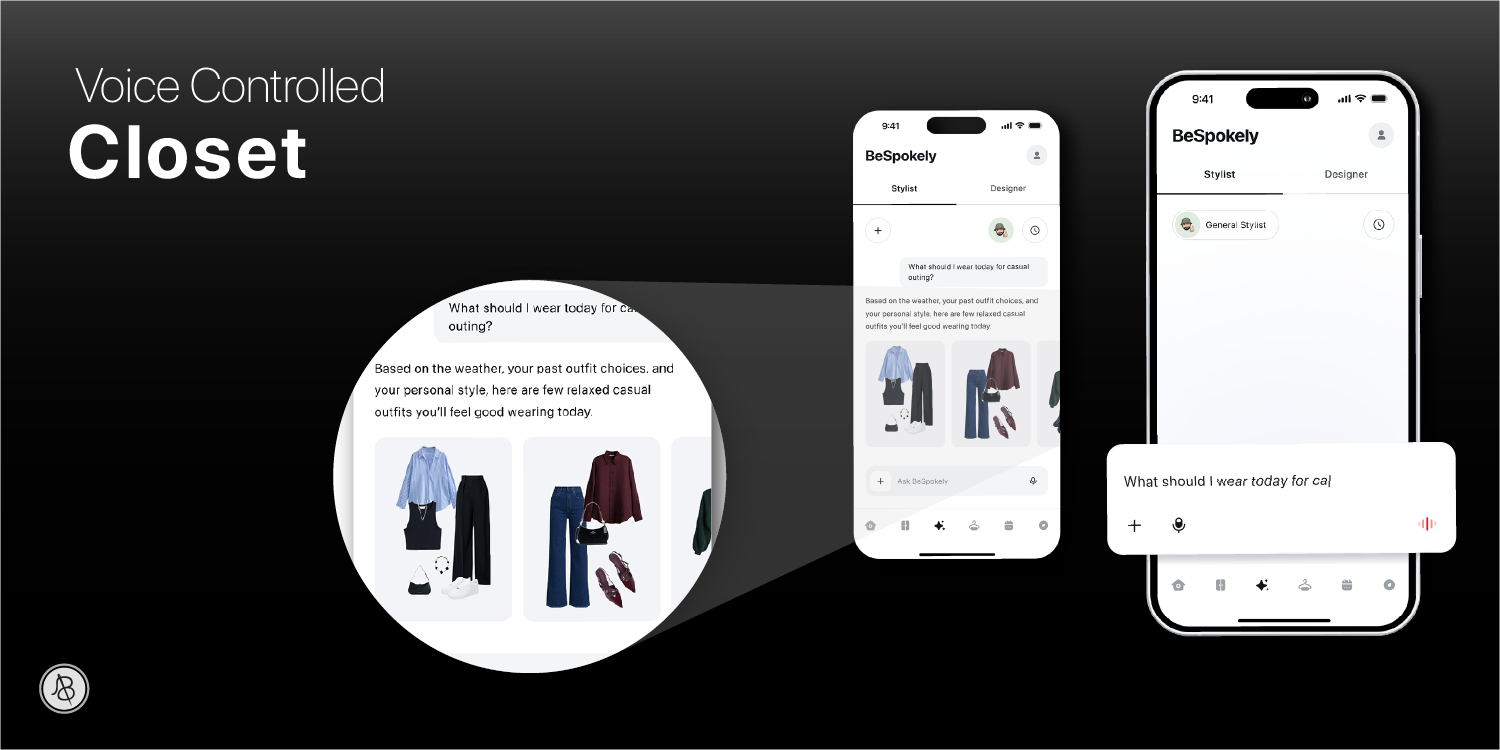
The idea of a wardrobe that talks back once sounded like the stuff of science fiction—a scene cut from a futuristic film where sleek automation solves every human inconvenience. Today, however, it feels not just plausible, but inevitable. Voice-controlled wardrobes are emerging as one of fashion tech’s most intimate innovations. They are not merely gadgets designed to impress; they are sophisticated systems built to solve the fundamental friction of getting dressed.
At their core, these systems represent a convergence of artificial intelligence, smart mirrors, ambient voice assistants, and deep data analytics. They combine to turn the act of dressing into a conversation rather than a crisis. The future of fashion isn't just about what you wear; it's about how you decide to wear it. And that decision is becoming a dialogue.
The Conversational Interface: Beyond the Touchscreen
For the last decade, our interaction with technology has been primarily tactile. We swipe, we tap, we pinch to zoom. But fashion is a hands-on experience of a different kind. You cannot effectively browse a digital inventory on a phone while you are physically holding a sweater up to your chest or trying to button a pair of trousers. The screen is a barrier. Voice, however, is seamless.
Voice-controlled wardrobes remove the friction of the interface. Instead of standing in front of your closet scrolling through a weather app or a calendar, you simply speak. "What should I wear today?" is no longer a rhetorical question muttered in frustration. It is a prompt.
The system’s response is not a random guess. It is a calculation based on layers of data that no human brain could process in seconds. It factors in the temperature outside, the chance of rain later in the afternoon, the specific events on your digital calendar, and—crucially—your past outfit choices. It knows you have a lunch meeting at a venue with a strict dress code. It knows you tend to run cold. It suggests a complete look: the navy wool trousers, the cream cashmere knit, and the trench coat.
This is the shift from a passive storage unit to an active participant in your morning routine. The wardrobe stops being a box where clothes go to die and starts behaving like a personal stylist that is always awake, always attentive, and intimately familiar with your life.
The Memory of Style: How AI Learns You
What sets voice-controlled wardrobes apart from the basic styling apps of the past is memory. A traditional closet is static. It has no idea that you haven’t worn that floral dress in three years, or that you reach for the same black blazer every time you have a high-stakes presentation. It is dumb storage.
An AI-driven wardrobe, however, is learning constantly. Every time you accept a suggestion, it reinforces a pattern. Every time you reject one—saying, "No, that’s too formal"—it refines its understanding of your taste. Over time, the technology learns you.
It begins to recognize nuances that even you might miss. It might notice that you only wear high-waisted silhouettes when you have long days, perhaps indicating a preference for comfort during stress. It might flag that you buy bold prints but never actually wear them, identifying a gap between your aspirational style and your reality.
This level of personalization transforms the wardrobe from a collection of fabric into a living archive of your identity. It moves beyond the binary of "clean" or "dirty" clothes. It understands context. It knows that your "weekend casual" is different from your "work from home casual." This dynamic adaptability ensures that the wardrobe evolves with you. As your taste shifts, the algorithm shifts with it, ensuring that the suggestions it makes today are better than the ones it made yesterday.
Solving Decision Fatigue: The Luxury of Clarity
We live in an era of overwhelming choice. The average person makes thousands of decisions every day, from what to eat to what email to answer first. By the time we stand in front of our closets, our cognitive batteries are often running low. This phenomenon, known as decision fatigue, is the enemy of style. It is why we default to the same boring outfits, not because we lack creativity, but because we lack the mental energy to curate something better.
Voice-controlled wardrobes offer a remedy to this modern malaise. They provide the luxury of clarity. By outsourcing the initial filtering process to an AI, you reclaim mental space. You are no longer starting from zero every morning. You are presented with curated options that have already been vetted for feasibility and style.
The emotional impact of this cannot be overstated. Mornings become calmer. The frantic search for a missing shoe or the realization that a shirt is wrinkled five minutes before you need to leave disappears. Dressing stops feeling performative—an act done to impress a mirror or a colleague—and starts feeling intuitive.
You are still the final decision-maker. The machine does not dress you; it empowers you. It presents the palette, but you paint the picture. However, because the friction of "finding" is removed, you have more energy for the "styling." You might take the AI’s suggestion and tweak it, adding a scarf or swapping the shoes. The process becomes creative rather than logistical.
The Death of Impulse: Changing How We Shop
The integration of voice technology and AI into our closets will inevitably ripple out to affect how we consume fashion. Currently, shopping is often a disjointed experience. We buy things because they look good on a mannequin or an influencer, without really knowing if they fit into the ecosystem of our existing wardrobe. This leads to the "closet full of clothes but nothing to wear" syndrome.
When your wardrobe is intelligent, shopping becomes surgical. Imagine standing in a store (or browsing online) and asking your digital wardrobe, "Do I have anything that goes with this green skirt?" The system can instantly analyze your inventory and tell you, "Yes, you have three blouses and a pair of boots that match perfectly." Or, conversely, "No, nothing in your current rotation matches this color palette."
This capability prevents the accumulation of orphan garments—those beautiful pieces that hang unworn because they have no partners. It encourages intentional consumption. Every new piece has a purpose. Every purchase is vetted against what you already own.
Furthermore, the data generated by your wardrobe can inform future purchases proactively. If the AI notices you wear your black turtleneck three times a week during winter, it might suggest investing in a higher-quality replacement or a second one in charcoal. It moves fashion consumption away from the adrenaline hit of the impulse buy and toward a model of strategic curation. This alignment of purchase and utility is the foundation of a sustainable wardrobe.
The Technology Ecosystem: Mirrors, Voice, and Data
To fully understand the potential of this future, we must look at the hardware. The voice assistant is the interface, but the smart mirror is often the visual medium. These reflective displays can overlay digital information onto your physical reflection.
Imagine standing before your mirror. You ask for an outfit for a rainy Tuesday. The mirror doesn't just speak; it displays the suggested outfit on your reflection using augmented reality (AR). You can "try on" the look digitally before you even take a hanger off the rack. This visual confirmation bridges the gap between the AI’s logic and your aesthetic preference.
This ecosystem will likely integrate with broader smart home networks. Your wardrobe could talk to your laundry machine. "The blue shirt is in the wash," it might warn you when you ask for it. It could sync with your health data, understanding that on days after poor sleep (tracked by your smart watch), you prefer softer, more comfortable fabrics.
The connectivity is limitless. But with connectivity comes the question of privacy. For a wardrobe to be truly effective, it needs intimate data—your schedule, your body measurements, your location. Trust will be the currency of this new fashion economy. Users will need assurance that their personal style data is not being weaponized for aggressive advertising, but rather used to enhance their daily life. The brands that win in this space will be those that prioritize privacy and utility over exploitation.
Redefining Personal Style in the Age of Algorithms
Critics might argue that handing over the reins of dressing to an algorithm will lead to a homogenization of style—that we will all end up dressing like optimized averages of current trends. However, the opposite is more likely true.
Algorithms, when designed well, are tools for discovery, not conformity. They can find connections that the human eye misses. They can suggest color combinations you deemed "wrong" but that actually work according to color theory. They can push you out of your comfort zone in a safe, controlled way.
True personal style is about consistency and evolution. It is about knowing what works for you. A voice-controlled wardrobe acts as a guardian of that style. It prevents the noise of passing fads from infiltrating your core aesthetic unless you explicitly invite them in. It helps you define your uniform, and then it helps you iterate on it.
Furthermore, this technology democratizes the experience of having a stylist. Historically, only the wealthy could afford someone to curate their looks and manage their wardrobe. Voice AI brings this service to the masses. It makes the feeling of being "put together" accessible to anyone with a smartphone or a smart speaker. It levels the playing field of fashion presentation.
The Human Element: Why We Still Need to Choose
Despite the sophistication of the tech, the human element remains irreplaceable. Fashion is emotional. It is political. It is deeply personal. An AI can know that it is raining, but it cannot know that you are feeling melancholic and need the psychological armor of your favorite leather jacket, even if a raincoat would be more practical.
It cannot know that you are wearing a specific dress today not because it fits the dress code, but because it was a gift from someone you miss. It cannot quantify the "vibe" of a cryptic party invitation.
This is why the conversational aspect is so critical. The interaction is not a command; it is a negotiation. You can override the system. You can say, "No, I want to feel powerful today." The system then learns what "powerful" looks like to you.
The future of getting dressed is not about automation replacing creativity. It is about reducing noise so that creativity can flourish. It is about removing the drudgery of inventory management so that the joy of self-expression can take center stage. The machine handles the logistics; the human handles the art.
Conclusion: The Ultimate Luxury
In a world where everything demands our attention—where notifications ping constantly and screens demand our gaze—a wardrobe that listens might be the most luxurious idea of all. It represents a technology that recedes into the background, supporting us without dominating us.
Voice-controlled wardrobes promise a morning routine that is fluid, efficient, and surprisingly human. They offer a return to a simpler relationship with our clothes, one where we are not overwhelmed by excess but supported by intelligence.
As we move forward, the question will not be whether we will use technology to get dressed, but how we ever managed without it. The closet of the future is open, and it is ready to talk.
The Intersection of Smart Home and High Fashion
The integration of voice-controlled wardrobes signifies a deeper merging of two previously distinct worlds: the smart home and high fashion. For years, "smart" clothing meant gimmicky wearables with flashing lights or fitness trackers. But the real revolution is happening in the infrastructure of the home itself.
When high fashion brands begin to collaborate with tech giants on these systems, the possibilities expand exponentially. Imagine a wardrobe system developed by a luxury house like Gucci or Prada. The voice assistant wouldn't just be a generic helper; it would be imbued with the brand's aesthetic DNA. It could offer styling tips based on the runway shows, translating high-concept fashion into wearable daily advice.
This partnership could fundamentally change the post-purchase relationship. Currently, once a brand sells you a coat, their relationship with you effectively ends until you return to buy something else. With a connected wardrobe, the brand becomes a continuous service provider. They can send digital updates to your wardrobe system—"Here is how to style that coat you bought last winter for the upcoming spring season." This ongoing dialogue builds immense brand loyalty and keeps the product relevant long after the initial transaction.
Navigating the Challenges of Implementation
Of course, the road to this conversational future is paved with challenges. The hardware costs for smart mirrors and RFID-tagged clothing (which allows the wardrobe to "know" what is inside it) are currently high. For this to become a mass-market reality, the technology needs to become more affordable and accessible.
There is also the logistical challenge of digitizing one's existing wardrobe. For a voice-controlled system to work, it needs to know what you own. This currently requires a manual process of photographing and cataloging items—a significant barrier to entry for the average user.
However, computer vision technology is advancing rapidly. Soon, smart cameras inside the closet may be able to automatically scan and identify garments as you hang them up, removing the need for manual input. Retailers are also beginning to provide "digital twins" of garments at the point of purchase, meaning your digital wardrobe updates automatically whenever you buy something new.
A New Language of Style
We are standing on the precipice of a new era in fashion history. Just as the invention of the sewing machine democratized the creation of clothing, and the rise of e-commerce democratized access to it, voice-controlled wardrobes will democratize the mastery of it.
This technology invites us to learn a new language of style—one that is spoken, shared, and evolved. It turns the solitary act of dressing into a dialogue with our own data, our own history, and our own aspirations.
The future of getting dressed is not about surrender to a machine. It is about collaboration. It is about using the precision of artificial intelligence to amplify the messy, beautiful, emotional art of being human. It is a conversation worth having.
Practical Steps Toward the Future
While we wait for the fully integrated smart mirror of our dreams to become a household staple, we can begin to adopt the mindset of the conversational wardrobe today.
The technology is coming, but the philosophy can start now. By treating our wardrobes with intention, intelligence, and care, we prepare ourselves for a future where fashion is not just something we wear, but a conversation we engage in every single day.
Conclusion: The Quiet Revolution
The revolution of the voice-controlled wardrobe will not be loud. It will not be marked by flashing lights or jarring noises. It will be quiet. It will be the sound of a calm voice in the morning suggesting the perfect sweater. It will be the silence of a mind that is no longer racing with decision fatigue.
It is a revolution of ease. In a world that is often chaotic and demanding, the ability to start the day with clarity, confidence, and intention is a profound gift. The future of fashion is listening. And it sounds beautiful.


.png)