

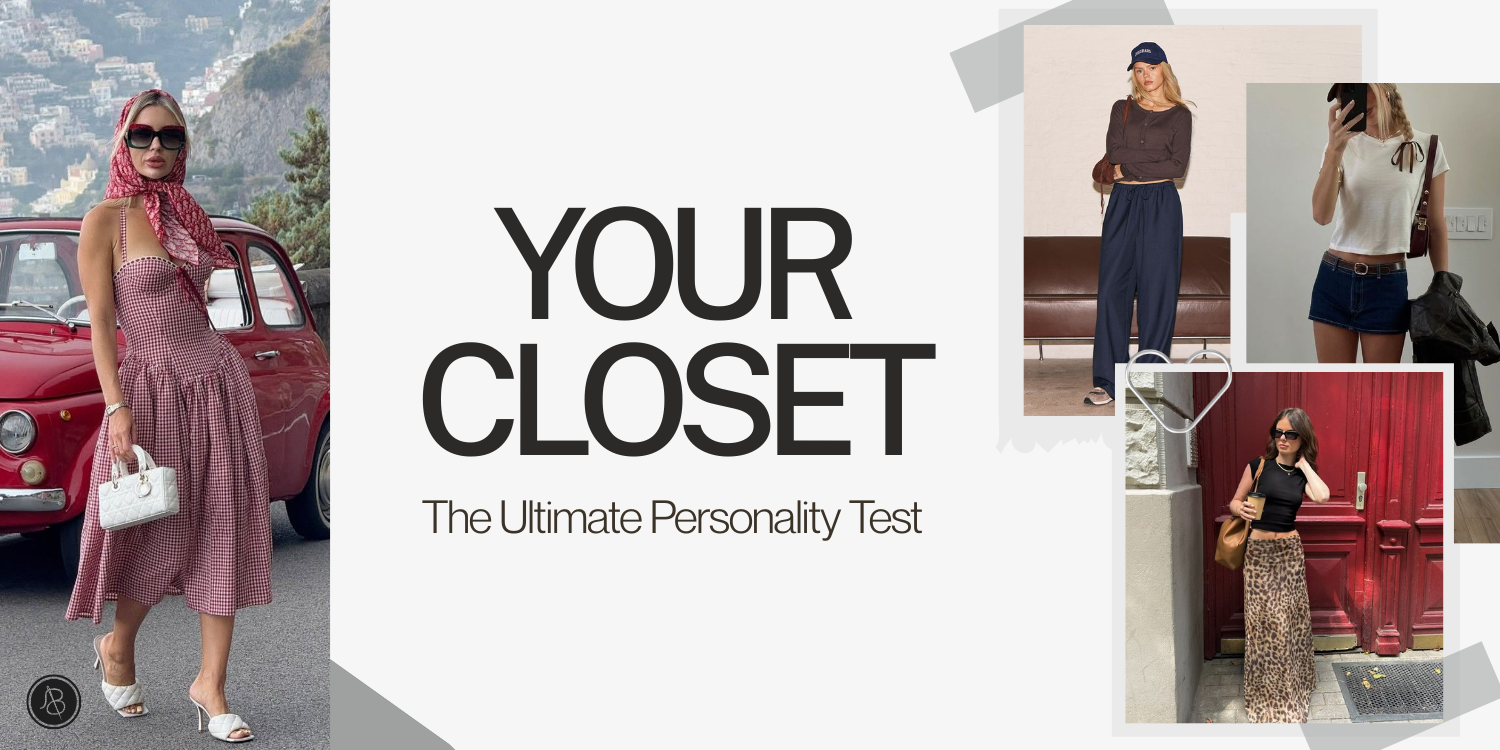
We like to pretend clothing is superficial. Something we throw on between morning coffee and the first email of the day. Something “fun,” but not serious. A hobby, a distraction, a simple necessity. We tell ourselves it’s just fabric, just trends, just stuff. But the truth is far less casual, far more revealing. Your closet is one of the most accurate personality assessments you will ever take. Unlike Myers-Briggs quizzes or job interviews where you can shape the narrative, your wardrobe never lies. It is a silent, brutally honest historian.
Your closet records your habits, your insecurities, your aspirations, and your comfort zones with unflinching accuracy. Every purchase you’ve ever made, every hanger left untouched for years, every single outfit you default to on a busy Tuesday tells a story about who you are. It’s a physical database of your decisions, your moods, and your unspoken desires. And for most of us, this ongoing test isn’t being failed with a loud, dramatic explosion of bad taste. It’s much quieter than that. Most people are failing it gently, politely, and almost imperceptibly, day after day. They are passing, but just barely, living in a state of stylistic neutrality that never quite feels like them.
This gentle failure isn't about committing fashion faux pas or wearing outdated styles. It’s a subtle but persistent disconnect between the person you are on the inside and the person you present to the world. It’s the feeling of being slightly out of sync, of wearing a costume that looks good enough but feels hollow. Your closet, in its quiet, organized chaos, is trying to tell you something important about yourself. The question is, are you ready to listen? Are you prepared to translate the language of unworn fabrics and default choices to understand what they truly reveal about your inner world? This isn't just about clothes; it's about closing the gap between who you are and who you show up as.
The Myth of “I Have Nothing to Wear”
The phrase is a universal anthem of frustration, usually sighed in front of a wardrobe overflowing with clothes. “I have nothing to wear.” It’s a declaration that seems, on its face, completely absurd. You have plenty. You have sweaters, jeans, dresses, and that one sequin top you bought for a party that never happened. The physical reality is that your closet is full. So, what do you really mean when you say those five familiar words?
You don’t mean you are without clothing. What you mean is: nothing feels right. Nothing in that vast collection of textiles resonates with the person you are in that specific moment. Nothing reflects how you see yourself, or more importantly, how you want to be seen by the world today. It’s a profound identity crisis playing out on the small stage of your bedroom floor. You aren't lacking options; you lack alignment. The clothes are there, but the connection is missing. They are artifacts of a person you once were, a person you thought you should be, or a person you might become "one day." They are not for the person standing there right now.
This deep disconnect is the natural result of a closet built without intention. Instead of a curated collection with a clear point of view, the closet becomes a disorganized storage unit for a lifetime of half-formed decisions and fleeting impulses. It’s a graveyard of sartorial good intentions: the dress for a lifestyle you don’t lead, the jeans for a body you don’t have, the blazer bought for a job interview you never got. Each piece represents a version of you that never quite materialized, an imagined self that exists only in theory. Your closet has become a museum of alternate realities, while you are left stranded in the present with nothing that feels authentic. The problem isn’t a lack of clothes. It’s a lack of clarity. Your wardrobe is a beautiful, complicated, and ultimately confusing mess because it reflects the beautiful, complicated, and confusing mess of a mind that hasn’t decided who it wants to be.
What Your Closet Is Really Saying About You
Your closet is a mirror, reflecting not just your body but your psyche. Every choice, every habit, and every neglected garment paints a detailed picture. By learning to read its language, you can uncover the subconscious patterns that define your relationship with style. Let’s decode what your collection might be whispering about you.
The Comfort Loyalist
Take a look inside your closet. Is it a sea of familiar silhouettes, reliable neutral colors, and slight variations of the same outfit? If so, you might be a Comfort Loyalist. You value stability, efficiency, and control. You’ve found a uniform that works, and you prefer not to gamble on the unknown. Your mantra is, “If it isn’t broken, don’t fix it.” You find security in routine, and your wardrobe is the ultimate expression of this preference. Getting dressed is a seamless, thought-free process, which frees up your mental energy for what you consider more important decisions. Your style is predictable, but in your eyes, that’s a strength, not a weakness. It’s dependable.
However, comfort itself is not the problem. The real issue is when comfort becomes a shield for avoidance. Over time, always choosing the safest, easiest option can quietly flatten your presence. It’s like eating the same meal every day; it’s nourishing, but it lacks excitement and discovery. You’re not underdressed, but you might be under-expressed. Your style becomes a form of camouflage, allowing you to blend in when you might secretly want to stand out. Your loyalty to comfort may be preventing you from exploring other facets of your personality—the creative, the bold, the playful. You’re so committed to what feels safe that you’ve forgotten what it feels like to take a risk, even a small one. This gentle failure means you’re presentable, but not fully present. Your wardrobe ensures you are never out of place, but it also ensures you never truly make a place your own.
The Trend Chaser
Does your closet have a revolving door? Is it constantly being updated with the latest viral micro-trend, statement pieces seen on influencers, and must-have items of the season? If this sounds familiar, you are likely a Trend Chaser. You are dynamic, adventurous, and culturally fluent. You thrive on newness and enjoy the thrill of experimentation. Fashion, for you, is a language that connects you to the present moment. You love the attention that comes with wearing something new and daring, and your style is a way to signal that you are current, relevant, and in the know. You are an early adopter, and your wardrobe is a testament to your ability to capture the zeitgeist. Getting dressed is an exciting, ever-changing game.
But here’s the catch: trends without a core identity can feel hollow. When your style changes dramatically every season but never settles into something that feels uniquely you, the act of getting dressed can become strangely unsatisfying. It’s a constant performance, a chase for external validation that never quite fills you up. You become a reflection of what’s popular, rather than an originator of personal style. The gentle failure of the Trend Chaser is a lack of substance. Your closet is exciting, but it’s also rootless. You may look fashionable, but you risk feeling like an imposter in your own clothes because they represent a fleeting moment, not a consistent self. This constant pursuit of the new prevents you from building a lasting relationship with your clothes and, by extension, a deeper understanding of your own aesthetic identity.
The Sentimental Archivist
For some, closets are less about clothing and more about emotional cartography. They are landscapes of memory, filled with artifacts from a life already lived. The dress from a first date, the t-shirt from a college concert, the suit from a first job—these items linger long after they’ve ceased to be wearable. If your closet is a museum of your past, you are a Sentimental Archivist. You are loyal, nostalgic, and deeply connected to your personal history. Each garment is a vessel for a memory, a milestone, or a relationship. Letting go of the item feels like letting go of the moment itself.
The issue isn’t the attachment. Humans are storytelling creatures, and our clothes are part of our narratives. The danger lies in stagnation. When your closet is dominated by who you were, it can quietly prevent you from stepping into who you are becoming. Dressing for your past self can feel comforting, like revisiting an old friend, but it keeps you tethered to a version of you that no longer exists. Your wardrobe becomes a beautiful cage, preventing you from evolving. The gentle failure of the Sentimental Archivist is that you honor your history at the expense of your future. You are so busy looking backward that you forget to dress for the life that is happening right now. Your style becomes a tribute to yesterday, leaving no room for the possibilities of tomorrow. Letting go isn’t about erasing memories; it’s about making space for new ones.
The Almost-There Stylist
You have great taste. You appreciate quality, you understand proportions, and you own some genuinely beautiful pieces. People compliment your outfits. On paper, you’re doing everything right. Yet, when you look in the mirror, something always feels slightly unfinished, a little bit off. If this resonates, you are the Almost-There Stylist. You possess the knowledge and the tools for great style, but you consistently hold back at the final moment. You are so close to a memorable look, but you edit yourself just before it happens.
This pattern often stems from a deep-seated hesitation or a fear of standing out too much. It's a manifestation of self-doubt. You might swap the statement shoes for a more sensible pair, remove the interesting piece of jewelry, or opt for the neutral coat instead of the colorful one. You dial it back, just in case. You’re afraid of being “too much”—too bold, too loud, too different. Your style isn’t bad by any means; it’s just perpetually restrained. The gentle failure here is one of confidence. You are so close to expressing your true aesthetic vision, but you let a quiet, internal critic have the final say. Your closet is full of potential, but your outfits rarely live up to it. You are constantly on the verge of a style breakthrough, but you keep pulling yourself back from the edge, settling for “good enough” when “great” is just one accessory away.
Why We Dress This Way
The reality is, most of us were never formally taught how to develop personal style. It’s not a subject offered in school. We learn through a messy combination of observation, imitation, and expensive trial-and-error. We absorb cues from magazines, movies, our parents, our peers, and now, the endless scroll of social media. Trends tell us what’s popular, but they never teach us what’s personal. We learn the “what” of fashion, but not the “why” of style. This lack of foundational knowledge leaves us vulnerable to building wardrobes that are fundamentally disconnected from our actual lives.
Without a strong sense of self to guide our choices, we end up buying for idealized versions of ourselves. We buy for:
We are, in essence, dressing for the life we think we should have, rather than embracing and elevating the life we actually live. The result is inevitable: a closet that looks full but feels empty and disconnected. It becomes a source of stress rather than a tool for self-expression. Every morning, we are confronted with the gap between our reality and our aspirations, all before we’ve even had our first cup of coffee. This gentle failure is not a personal failing; it’s a systemic one. We were given the pieces but never the instructions on how to put them together in a way that makes sense for us.
Style Isn’t About Fashion — It’s About Self-Trust
This brings us to the core of it all. Great personal style has surprisingly little to do with money, following trends, or wearing designer labels. Those are just tools. True style is an external manifestation of internal clarity. It comes from knowing yourself deeply enough to make consistent choices that feel authentic. It’s about cultivating self-trust. When you trust your own instincts, you no longer need the validation of a trend report or a fashion magazine to tell you what works. You just know.
This self-knowledge is built by paying attention to your own responses. When you know:
When you have the answers to these questions, your closet stops feeling like a question mark and starts becoming a statement. Style becomes intuitive. The process of getting dressed gets faster and easier because you’re no longer sorting through a closet of strangers’ clothes; you’re choosing from a collection that is exclusively, unapologetically yours. Confidence stops feeling like something you have to force or fake. It emerges naturally because what you’re wearing is in complete harmony with who you are. You’re not wearing a costume; you’re wearing a second skin. This alignment is the ultimate goal, the true passing grade on the personality test of your closet.
How to Start Passing the Test
The solution to a disconnected closet isn’t a shopping spree. You cannot buy your way to better style. The journey to alignment begins with a much quieter, more introspective step: paying attention. Your existing wardrobe, with all its flaws and triumphs, is the only textbook you need. It contains all the data required to start making better choices. You just have to learn how to read it.
Instead of rushing to buy more, pause. Become an observer of your own behavior. For the next week, simply notice:
Your answers are already there, hanging in your closet or folded in your drawers. The goal of this exercise isn’t to achieve perfection. It’s to cultivate honesty. It’s about closing your eyes to the noise of trends and influencers and listening to your own quiet preferences. Be ruthless in your self-assessment. Acknowledge what truly brings you joy and comfort, and be brave enough to admit what doesn’t. This audit is the first, most critical step toward building a wardrobe that serves you, rather than one you have to serve.
Final Thought
Your closet isn’t judging you. It has no opinion. It is simply a neutral, unbiased reflection of you—your history, your habits, your hopes, and your hesitations. It is a mirror, and like any mirror, it can only show you what is there. For many, that reflection is slightly blurry, a person dressed out of habit, obligation, or a vague sense of what is “correct.”
But once you stop dressing on autopilot and start dressing with intention, everything changes. The transformation isn’t just aesthetic. It’s psychological. You begin to feel more integrated, more whole. This shift doesn’t happen because you’ve suddenly become trendier or more polished. It happens because you are finally, beautifully aligned. The person you are on the inside is now visible on the outside.
Look around any room. The best-dressed people are rarely the loudest or the most extravagantly adorned. They are the ones who radiate a quiet sense of ease. They are comfortable in their clothes because they are comfortable in their skin. They are, in a word, self-aware. They’ve passed the test not by acing fashion, but by mastering themselves. And that is a skill worth far more than any piece of clothing you could ever own.