Wardrobe Decluttering: 2026's First Real Fashion Trend
Published · Updated
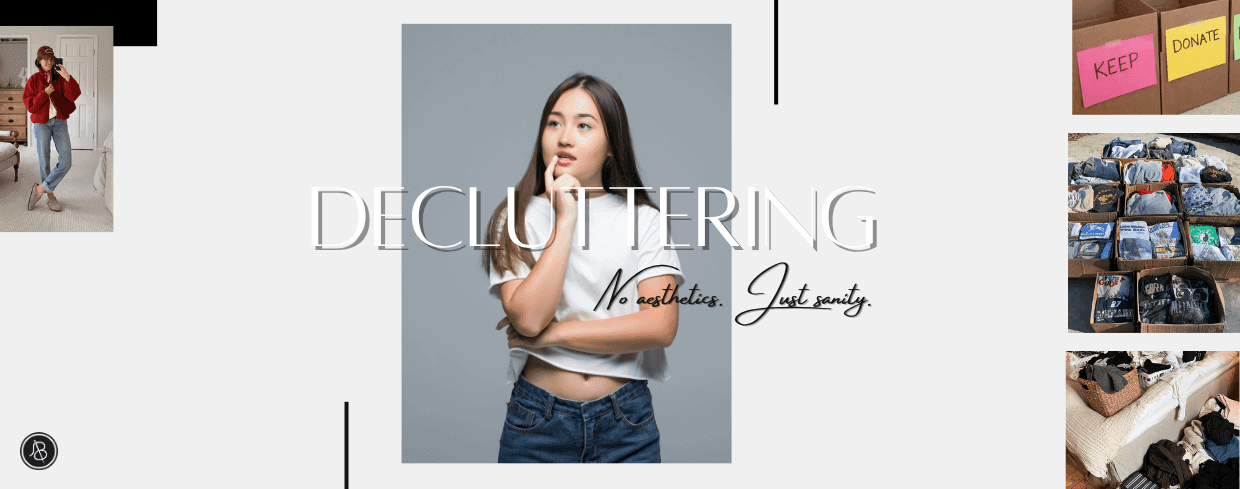
If you’ve ever stood in front of a closet overflowing with clothes and felt like you had absolutely nothing to wear, you are not alone. That feeling, a strange mix of being overwhelmed and underwhelmed, isn’t a styling issue. It’s not a sign that you need to go shopping. It’s a symptom of a deeper problem: clutter. And in 2026, people are finally done pretending otherwise. The first, and perhaps most significant, trend of the year has nothing to do with a new color, a specific silhouette, or a must-have accessory. It’s about subtraction. It’s the intentional, liberating act of decluttering.
This isn’t the aesthetic decluttering you’ve seen on social media, with matching beige baskets and perfectly folded sweaters organized by shade. This is about sanity. The movement has gone mainstream because decision fatigue is a real, tangible drain on our daily energy. We are collectively exhausted by the paradox of choice. Too many clothes, too many options, and zero clarity lead to a small, simmering crisis every single morning before the first cup of coffee has even been finished.
The shift is as simple as it is profound. Instead of chasing more outfits through endless consumption, people are actively choosing to reduce the noise. They are editing their lives, starting with their wardrobes, to create space for what truly matters. This isn't about embracing a strict minimalist doctrine. It’s about a practical desire to remove friction from the day. It’s about making one of the first decisions you make each morning feel effortless again. The goal is to do it once, do it properly, and reclaim your peace of mind. Your future self will thank you.
Before we can appreciate the solution, we must fully diagnose the problem. The modern wardrobe has become a storage unit for past identities, aspirational selves, and bad decisions. It is a physical manifestation of the "just in case" mentality that governs so much of our consumer behavior. We hold onto the dress we wore once to a wedding five years ago, just in case a similar event comes up. We keep the jeans that are one size too small as "motivation," just in case we hit a new fitness goal. We retain the trendy blazer bought on a whim, just in case we suddenly develop a lifestyle that requires it.
Each of these items carries a small psychological weight. The motivational jeans can feel like a quiet judgment. The unworn trendy pieces are monuments to wasted money. The special occasion dress is a reminder of a life we may not actually be living. This accumulation happens gradually, almost silently, until one day you open your closet doors and are met with a wall of fabric that feels more like an obstacle than a resource.
This is where decision fatigue truly takes root. The human brain is not wired to process an infinite number of choices efficiently. When confronted with hundreds of garments and thousands of potential combinations, it defaults to what is easy and familiar. This explains why most people wear only about 20% of their wardrobe 80% of the time. We retreat to the same few "safe" outfits because the mental energy required to innovate is simply too high, especially in the morning.
The consequences are more significant than just a few wasted minutes. Starting your day with a sense of frustration and stress sets a negative tone that can linger for hours. It fosters a feeling of dissatisfaction, making you believe the problem is a lack of clothes rather than a lack of organization. This often triggers a destructive cycle: you feel you have nothing to wear, you buy more clothes to fill the perceived gap, the clutter increases, and the initial problem of wardrobe paralysis becomes even worse. Decluttering in 2026 is the circuit breaker for this exhausting cycle.
The Method: A Ruthless Edit for a Peaceful Mind
The new approach to decluttering is not gentle. It is a decisive, surgical strike against the chaos. It begins with one uncomfortable but absolutely essential step: pull everything out. Yes, everything. Every shirt, every pair of pants, every forgotten scarf, every single sock. Pile it all onto your bed or on the floor.
If seeing the sheer volume of your clothing in one place feels shocking, that is the entire point. You are confronting the reality of your consumption. Most of us have no true awareness of how much we own because it is neatly hidden away behind closet doors. This "clothing mountain" is a powerful visual that forces you to acknowledge the scale of the problem. A wardrobe doesn’t just lack clothes; it lacks awareness. This moment of shock is the catalyst for genuine change.
Once everything is out in the open, the editing process begins. There is only one rule, one question that cuts through all the excuses, justifications, and sentimental attachments. Forget asking if it sparks joy. The only question that matters is this:
Would you actually wear this next week?
This question is brutally effective. It is immediate and practical. It forces you out of the hypothetical future and into the reality of your current life. Not "someday, when I have the right shoes." Not "if it were styled better." Not for a fantasy version of you that doesn’t exist yet. Next week.
Answering this question honestly will instantly sort your clothes into three distinct categories:
The "Yes" Pile: These are the pieces you wear often. They are your repeat outfits, your go-to items, the clothes you reach for without thinking. They feel easy and comfortable.
The "Maybe" Pile: These are the pieces you wear sometimes. They might be for specific occasions, or perhaps they require a bit more effort to style. This pile requires a second, more critical look.
The "No" Pile: This is the easiest pile to create but the hardest to let go of. These are the pieces that make you wonder why you even own them at all.
What needs to go becomes painfully obvious when filtered through the "next week" question. The clothes that end up in the "No" pile usually fall into a few key categories. If an item hasn't been worn in over a year, it is not waiting for a moment; it is taking up valuable physical and mental space. If it was purchased for a lifestyle you thought you wanted but never actually lived like elaborate cocktail dresses when you prefer quiet nights in—it represents a past fantasy, not a present reality. If it is uncomfortable, awkward, ill-fitting, or requires constant adjustment throughout the day, it is not an asset; it is an energy drain.
This process is not about shame or regret. It’s about liberation. Every item you decide to let go of is a decision you no longer have to make in the morning.
After the great purge, you are left with the essence of your personal style. What stays are the clothes that truly serve you. These are the items from your "Yes" pile and a very select few from the "Maybe" pile that passed a second round of scrutiny. This is your new, functional wardrobe.
You will likely notice a pattern among the keepers. They are your repeat outfits. Society has conditioned us to fear repeating outfits, as if it’s a sign of a lack of style or resources. But in 2026, the mindset is shifting. Repeating an outfit is not a failure; it is a success. It means you have found a combination that works, that makes you feel confident, and that you can rely on. These are your personal uniforms, and they are the secret to an effortless morning.
The clothes that remain are also your comfort silhouettes. These are the shapes and cuts that you know flatter your body and feel good to wear. They don’t pinch, pull, or require you to hold your breath. They allow you to move through your day with ease. True style is not about contorting yourself to fit into a trend; it’s about finding trends that fit your life and your body.
Finally, the pieces that stay are the ones that feel easy, not impressive. These are the clothes you don’t have to overthink. They mix and match seamlessly. They don’t require special undergarments or a specific set of accessories to work. Their beauty lies in their simplicity and versatility. Your decluttered wardrobe should be a collection of these reliable, easy pieces.
The goal is not to have a barren, minimalist closet. It’s to have a closet where every single item is a viable option. It’s about having a higher success rate when you get dressed. Instead of a closet where only 20% of the items are worn, you now have a closet where 100% of the items are ready to be worn. The options are fewer, but the possibilities feel greater because every choice is a good one. This is the end of wardrobe paralysis.
Decluttering your wardrobe is a project. Keeping it decluttered is a habit. Without a system to maintain your newly created order, you will find yourself back in a state of chaos within a year. The most effective system is a simple but strict one: the "one in, one out" rule.
The rule is exactly what it sounds like. For every new piece of clothing that comes into your wardrobe, one old piece must go out. No exceptions. No negotiations. This isn't a punishment; it is a discipline that forces you to be a more conscious consumer.
When you adhere to this rule, your shopping habits change dramatically. Before you buy something new, you have to mentally decide what you are willing to let go of to make space for it. This simple consideration elevates the stakes of every purchase. Is this new shirt really better than every other shirt I already own? Am I willing to part with a beloved sweater to make room for this new one?
This process forces you to move from an "addition" mindset to a "curation" mindset. You are no longer just accumulating items; you are actively managing a collection. You become the curator of your own wardrobe, and your standards for what is allowed to enter become much higher. Impulsive purchases decrease because the barrier to entry is greater than just the price tag. You start to think about longevity, versatility, and how a new item will integrate with your existing core wardrobe.
The "one in, one out" rule prevents the slow, insidious creep of clutter. It keeps your wardrobe at a manageable size, ensuring that the calm and clarity you worked so hard to achieve become a permanent state, not just a temporary fix. It is the single most important habit for ensuring that your mornings remain easy and your wardrobe remains functional for the long term.
Decluttering as a trend for 2026 is a quiet rebellion. It is a rebellion against the pressure of relentless consumption, against the myth that more is always better, and against the daily friction that complicates our lives. It is the recognition that true luxury is not owning a lot of things, but having a life that feels easy.
By undertaking this process once and committing to its maintenance, you fundamentally change your relationship with your clothes and with your mornings. The daily dread of facing your closet is replaced with a sense of calm and control. The ten minutes of frantic indecision become thirty seconds of simple action. Getting dressed becomes automatic again, a background task that requires almost no mental energy, freeing up that energy for more important things.
Your wardrobe transforms from a source of stress into a tool for living. It is a curated collection of pieces that you love, that fit you well, and that work for the life you actually have. Every item is a "yes." Every outfit is a success.
This is more than just cleaning out your closet. It is an act of self-care. It is a commitment to a simpler, more intentional way of living. So save this. Do the work. Your future self, the one who is calm, confident, and effortlessly put-together every single morning, will thank you.
How do I start decluttering my closet?
Start with one category at a time, like tops or shoes, and ask honestly whether you've worn each piece in the last year.
How often should I declutter my wardrobe?
Twice a year, at each major season change, is usually enough to keep a wardrobe from creeping back into clutter
Once you've cleared out what doesn't belong, build a digital closet with BeSpoke AI Stylist so it stays organized going forward.
Ready to upgrade your style game? Download BeSpoke AI Stylist and let your AI stylist take it from here.

Author
Neeraj Bansal